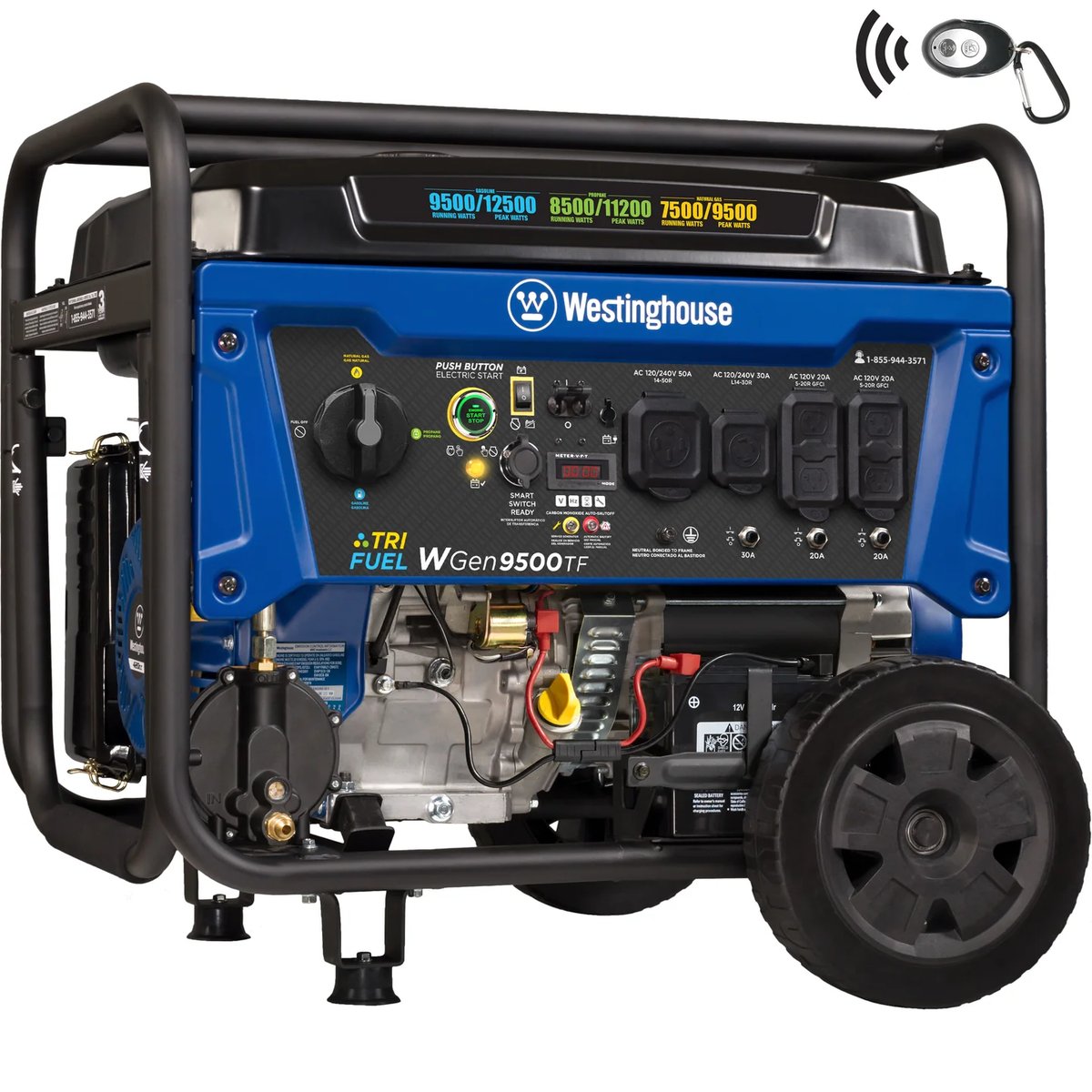
Westinghouse WGen9500TF tri-fuel portable generator
Westinghouse Outdoor Power Equipment · WGen9500TF
Rated 4.7 out of 5: 4.7 · 1,953 ratings
Gasoline, propane or natural gas, 9,500 running watts, a remote start fob and a CO sensor that shuts it down. Enough for most of a house, run outside.
Westinghouse WGen9500TF tri-fuel generator with CO sensor, remote start key fob, 12 V battery charger, oil and funnel, tool kit and manual
We earn a commission if you buy through these links, at no cost to you.
Manuals and documents
- 9,500 Wrunning on gasoline, 12,500 W peak, per Westinghouse
- 3 fuelsgasoline, propane or natural gas, per Westinghouse
- 12 hoursat 25 percent load on 6.6 gal, per Westinghouse
- CO shutdownautomatic, per Westinghouse
“Big enough for the well pump and the furnace through a transfer switch, and it will burn whichever fuel you can get.”
The WGen9500TF is a home-backup generator: 9,500 running watts and 12,500 peak on gasoline, from a 457cc Westinghouse engine. Westinghouse says it runs up to 12 hours on a 6.6 gallon tank at a quarter load. Through a transfer switch installed by an electrician, a generator this size can carry a 240 V well pump and most of a house.
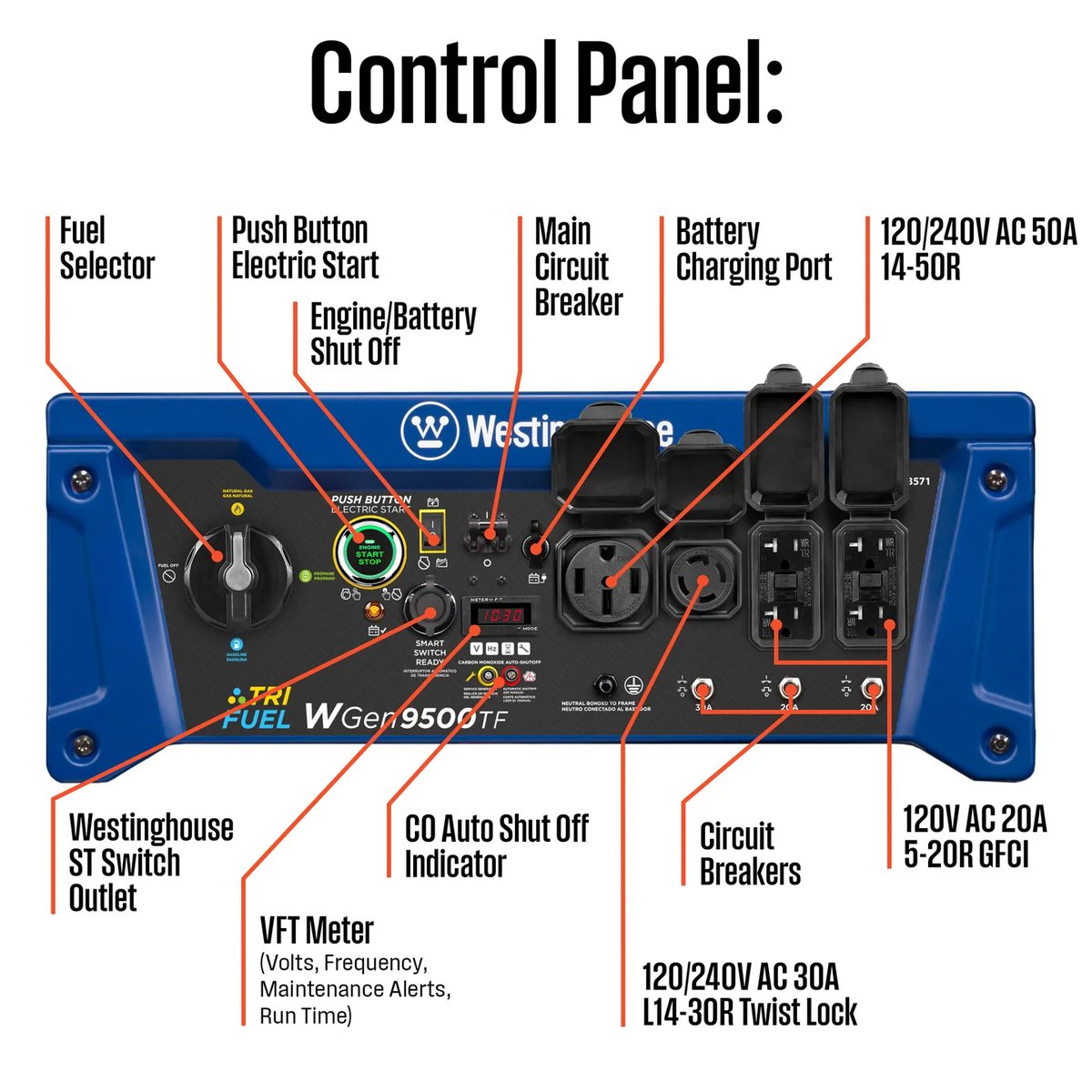
Tri-fuel is the point. When the gas stations are dark, it runs on propane (8,500 running watts) or, connected to a natural gas supply as its manual describes, on natural gas (7,500). It starts from a key fob, shows volts, frequency and hours on its display, and its carbon monoxide sensor shuts the engine down if dangerous CO levels are detected.
That sensor is a backstop, not a license. A generator's exhaust kills more people in a bad outage than the storm does. Run it outdoors only, at least 20 feet from every window, door, vent and attached garage, exhaust pointed away. Never in a home, garage, basement, crawlspace, shed or on a porch, even with the doors and windows open.
Other models
How to use it
- Before the outage: put battery-powered CO alarms outside every sleeping area and on every level, and test them. Have a licensed electrician install a transfer switch if you want to power house circuits.
- Set the generator outdoors, on level ground, at least 20 feet from the house and every opening, exhaust pointed away. Keep it dry without boxing it in.
- Add the oil, then fuel: gasoline in the tank, or a propane or natural gas connection as the manual describes.
- Start it with the fob or the button, then connect through the transfer switch's inlet, or plug appliances in with heavy-duty, outdoor-rated, grounded cords rated for the load.
- Never plug it into a wall or dryer outlet: that backfeeds the utility lines and can kill a lineworker.
- Shut it off and let it cool before refueling. If a CO alarm sounds or anyone feels dizzy, sick or confused, get everyone outside to fresh air and call 911.