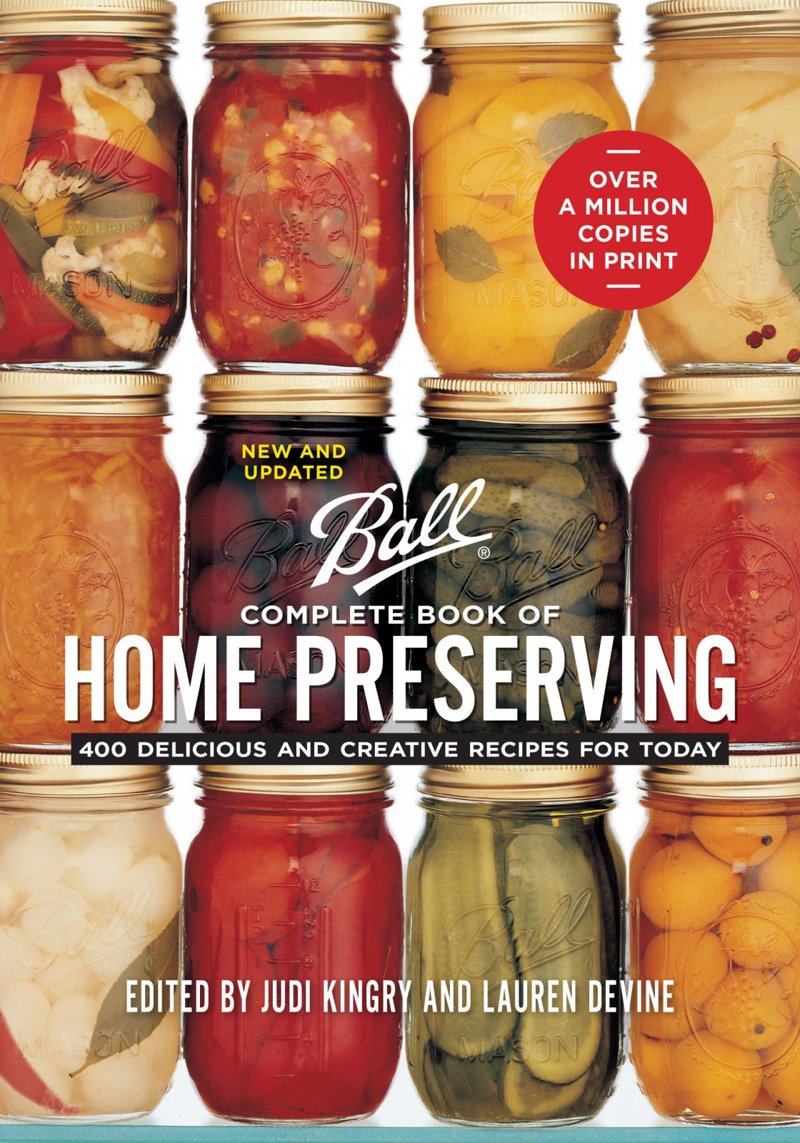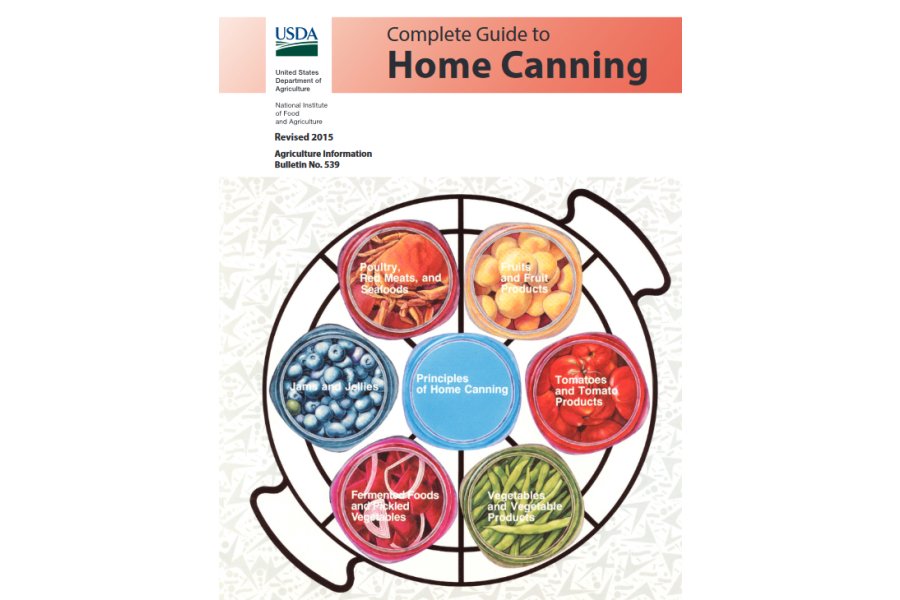
USDA Complete Guide to Home Canning (print)
- 196 pages full color, spiral-bound, per Purdue
- 2015 the current USDA revision
A summer garden on the shelf all winter, no freezer and no power bill. Canning does it, when you follow the tested recipe.
A freezer full of food lasts as long as the power does. A shelf of home-canned jars does not care. Canning puts up beans, tomatoes, fruit, stew and meat in sealed jars that sit in a cool, dark cupboard until you need them.
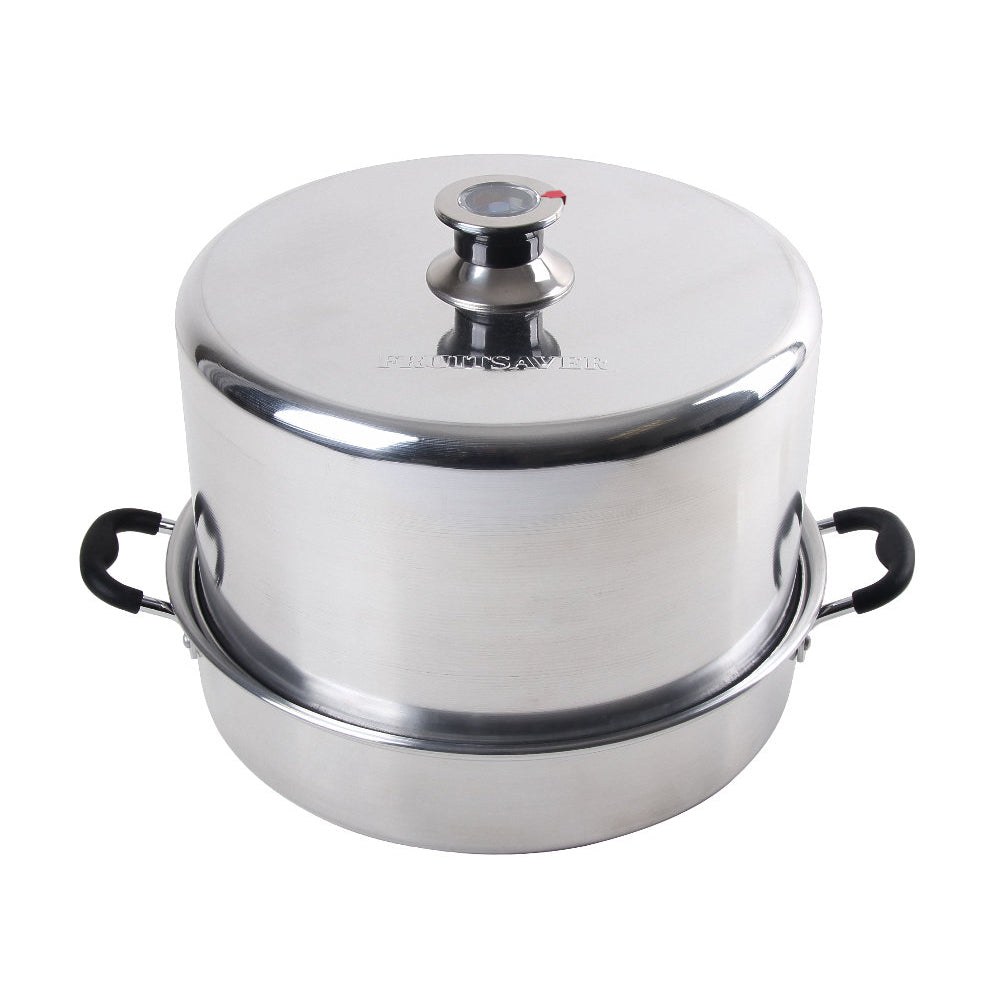
The one rule that matters. The USDA's Complete Guide to Home Canning sorts every food by its acidity. High-acid foods (fruit, jams, pickles, sauerkraut, and tomatoes with added lemon juice) are safe in a boiling-water bath. Low-acid foods (every plain vegetable, dried beans, meat, poultry, fish and soups) must reach 240 to 250 F, and only a pressure canner gets there; the USDA publishes no water-bath process for them at all. Water boils cooler as you go up, so times and pressures change with your altitude: read the column for yours in every table.
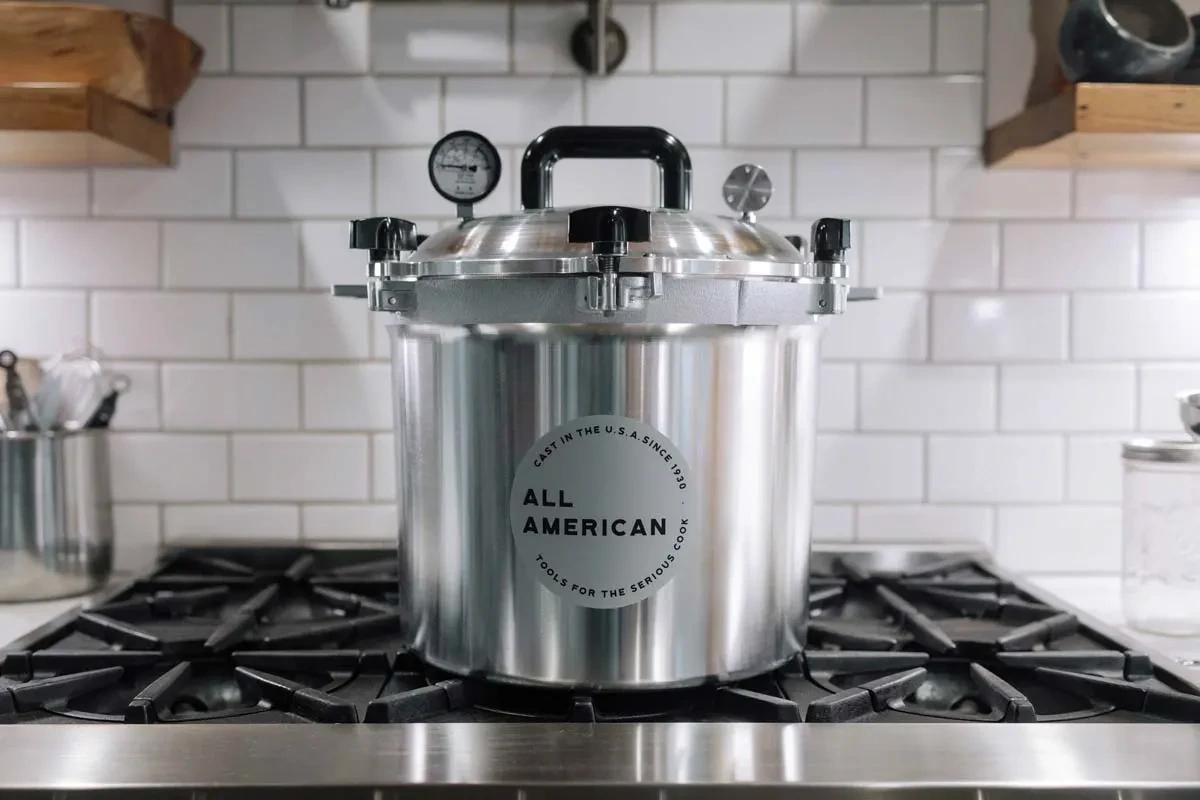
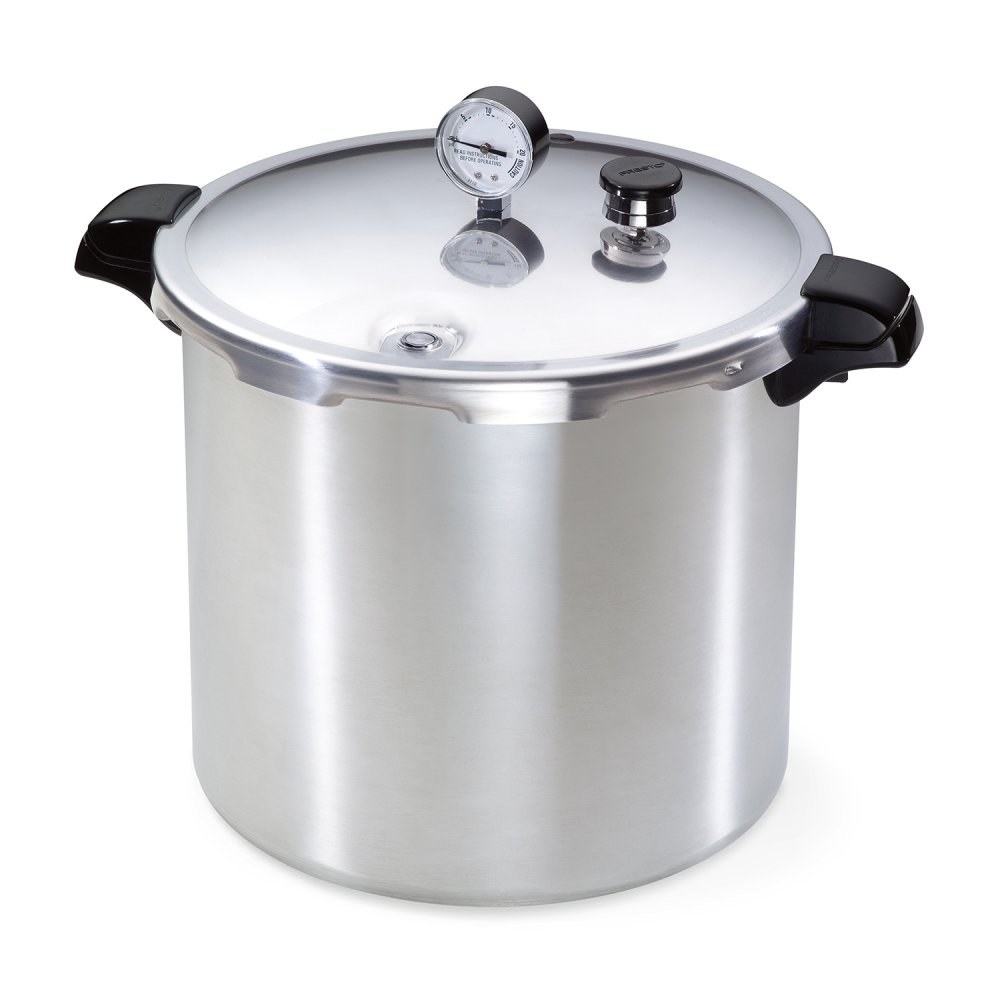
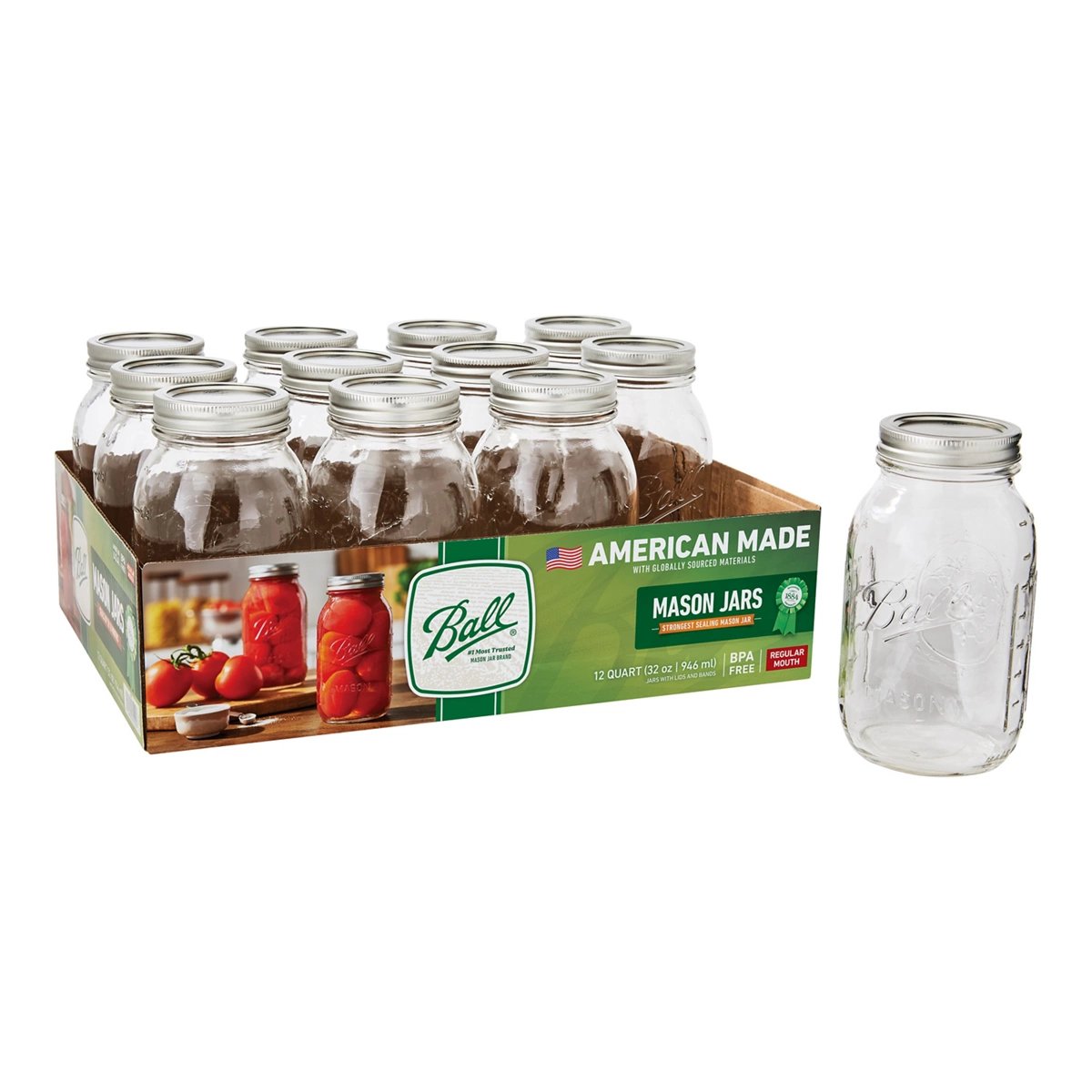
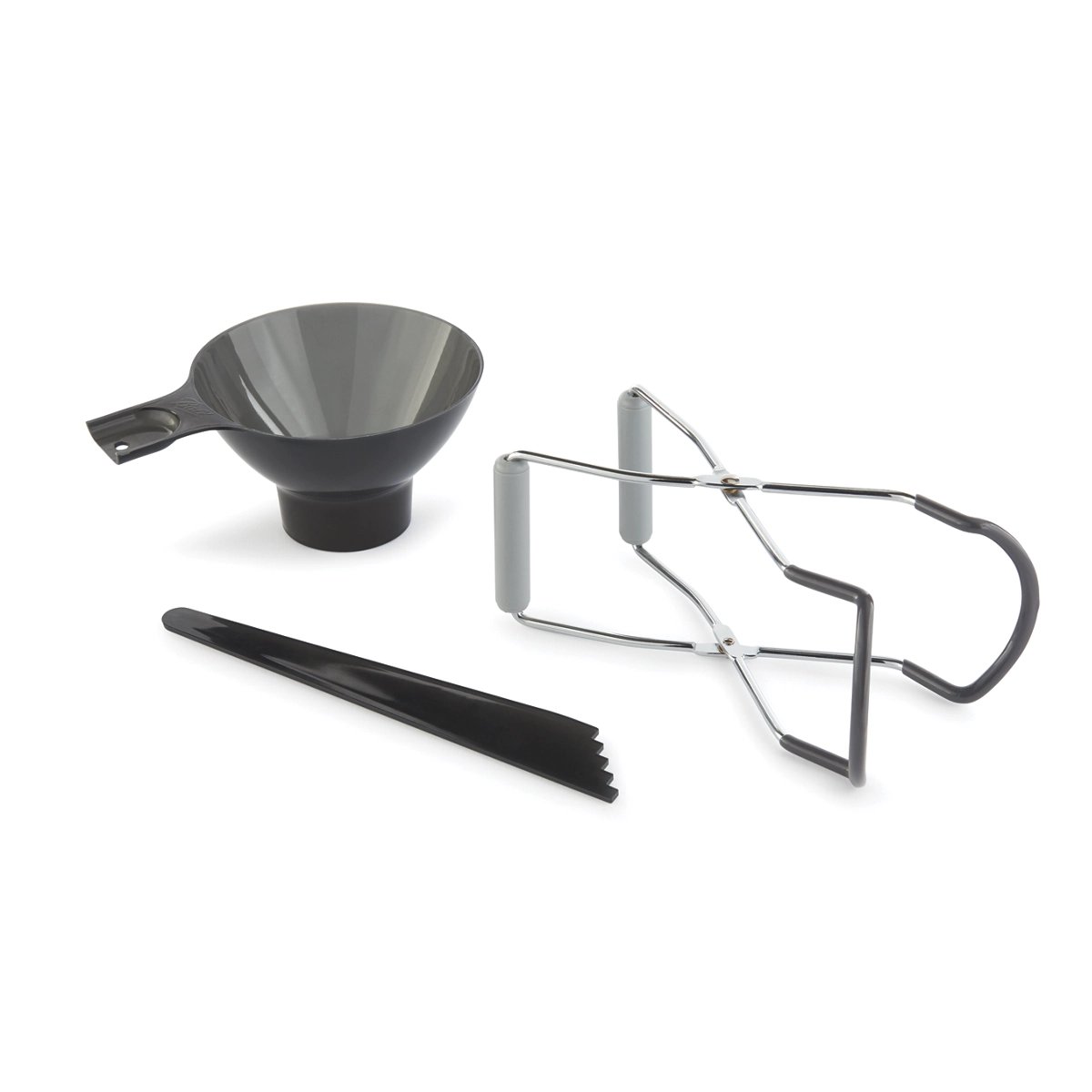
So the kit starts with the guide itself and a pressure canner. A weighted-gauge canner needs no yearly gauge testing, and it doubles as the water-bath canner. Add standard Mason jars with two-piece lids (new flat lids every time; the bands are reused), a jar lifter to take the jars out of the boiling water straight up, and a wide-mouth funnel that fills to the headspace mark without touching the rim.
Use tested recipes only, from the USDA, the National Center for Home Food Preservation or a university extension, never an untested family recipe.