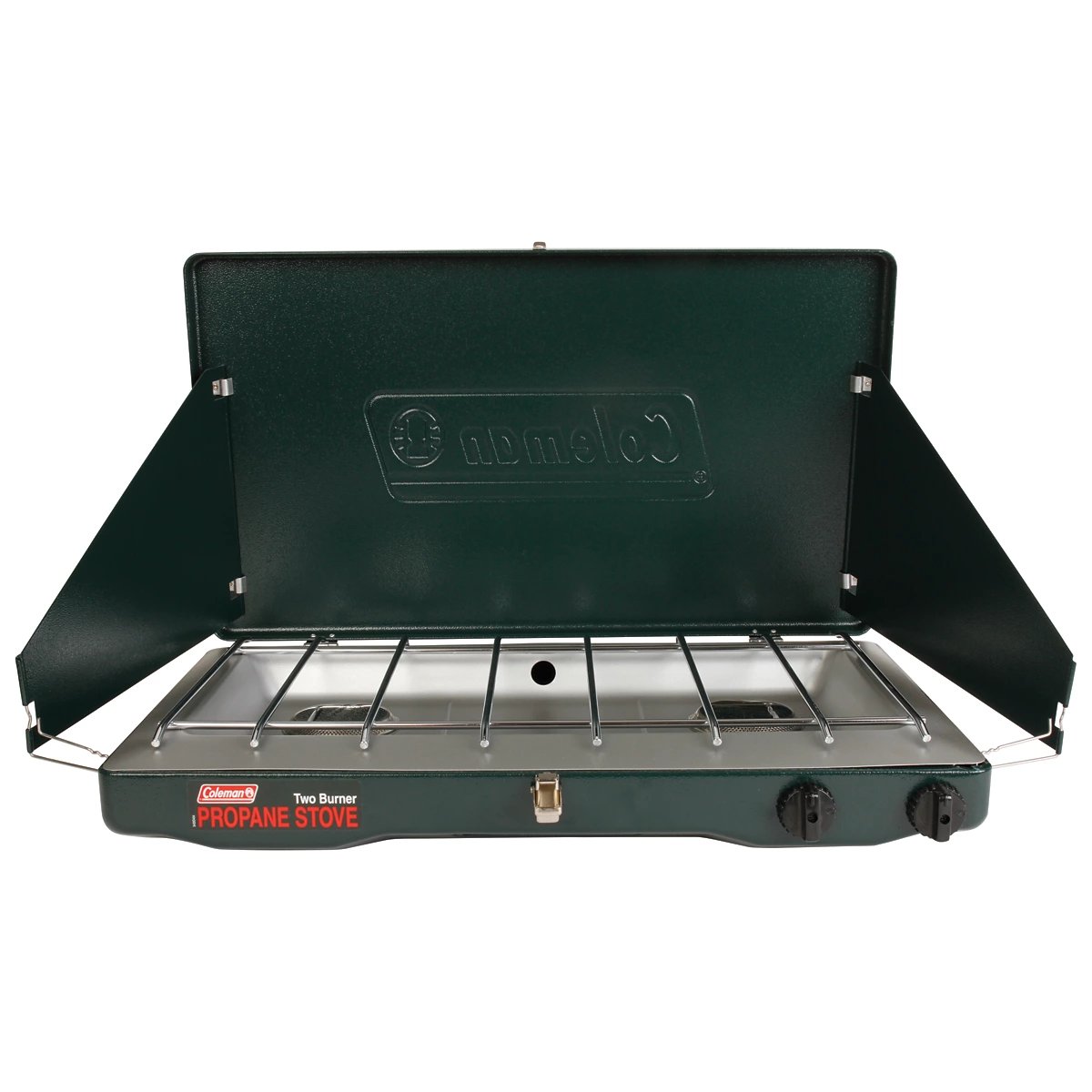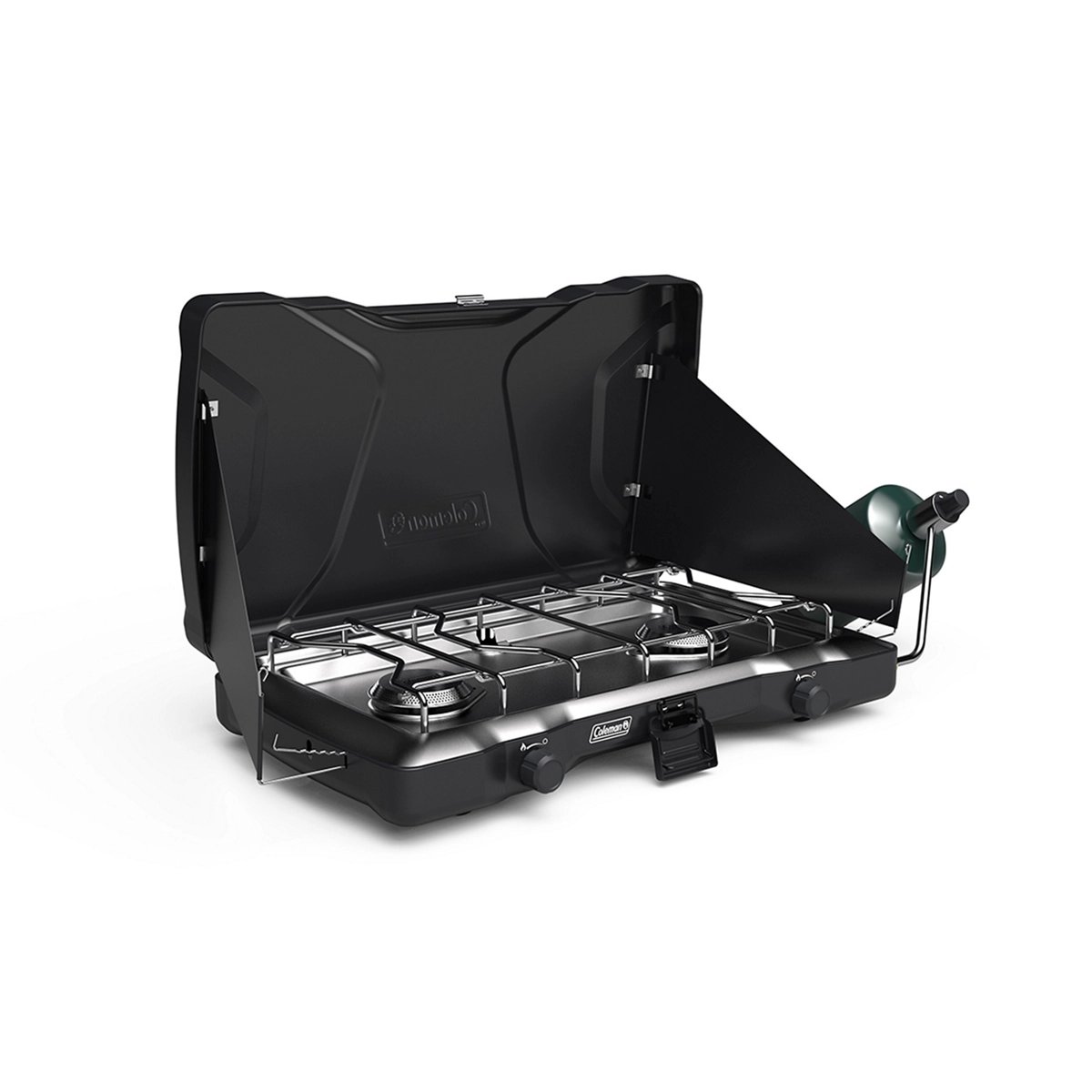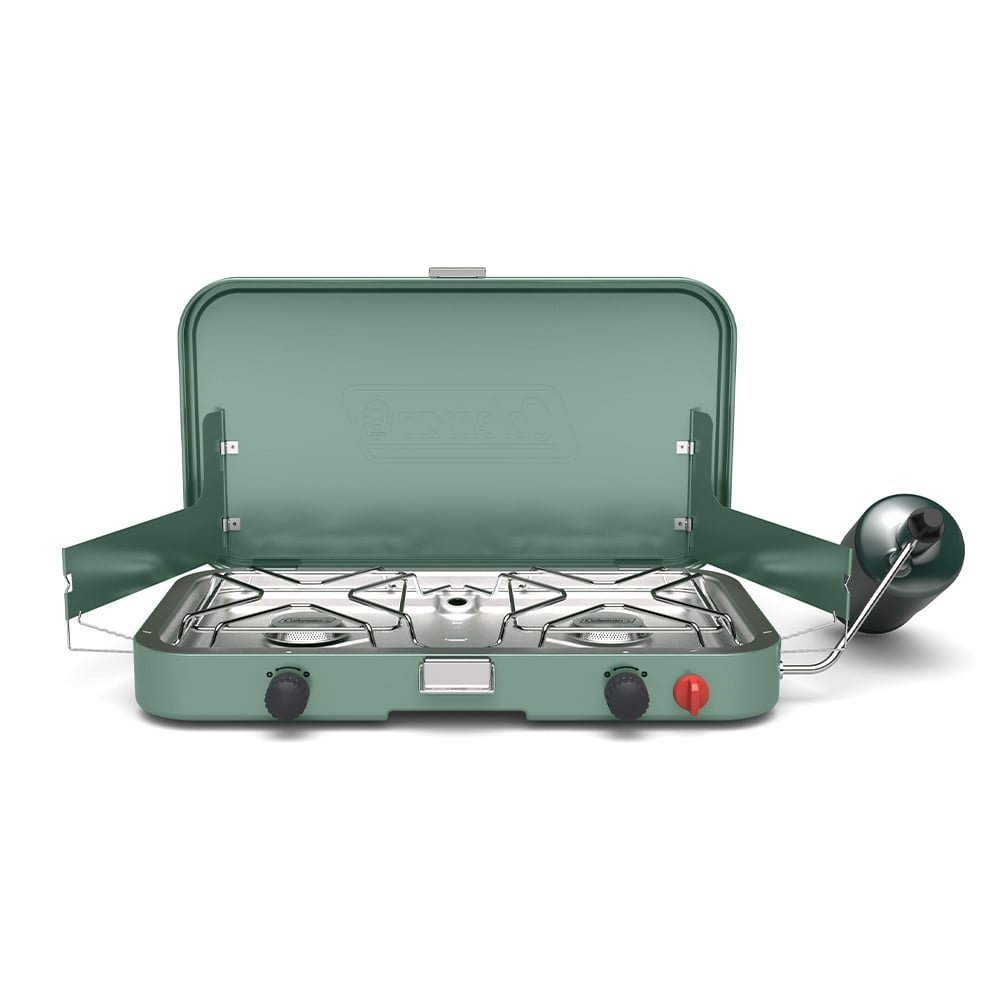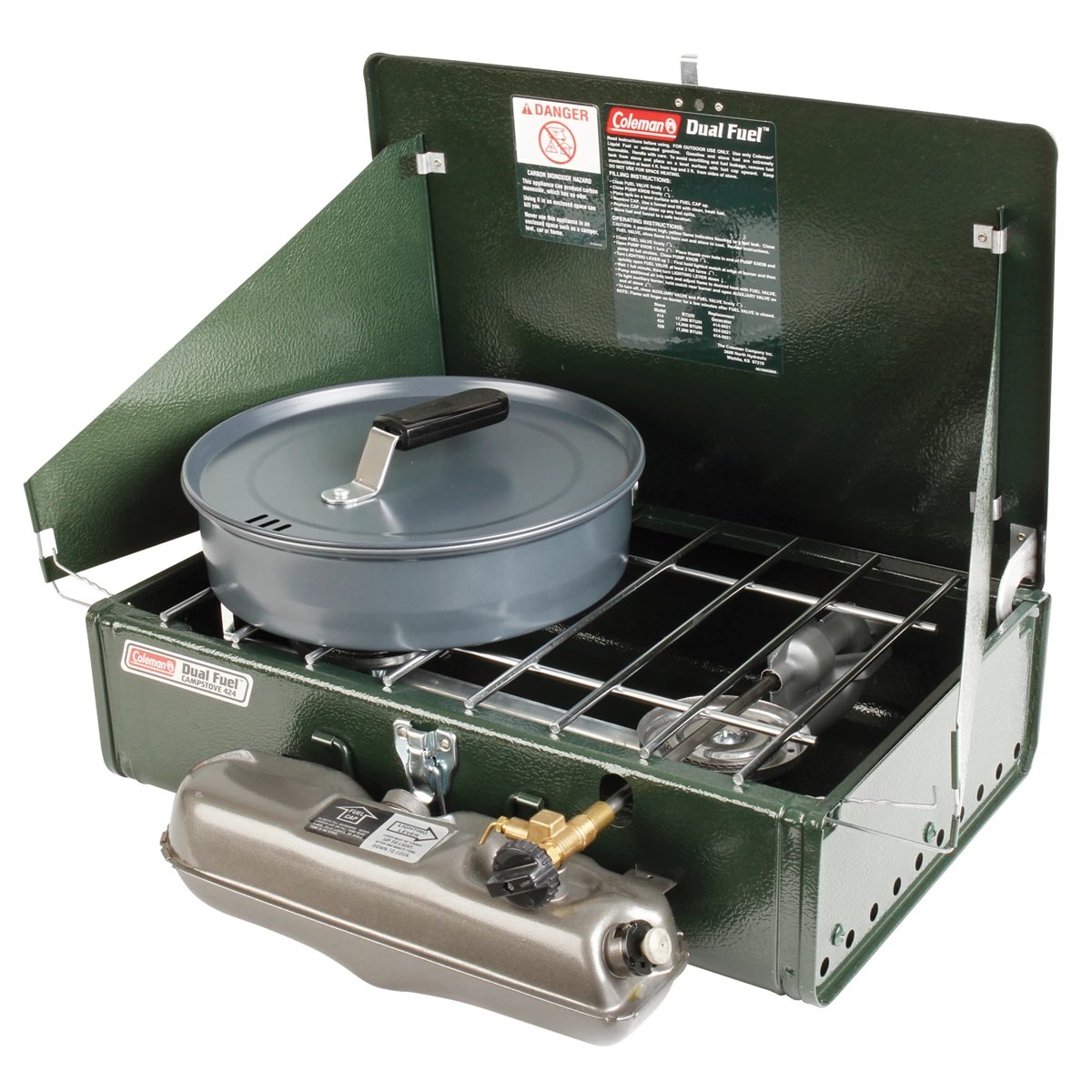
Coleman dual fuel two-burner stove
- 14,000 Btu/h total from two burners, per Coleman
- Up to 2 h per tank, per Coleman
The power is out and the range is dead. You still need to boil water and cook a hot meal: here is the stove that brings its own fuel.
When the power goes, the kitchen goes with it: no range, no microwave, no kettle. The one thing you cannot skip is boiling water, and a hot meal on the third cold day is worth more than it sounds. The answer is a stove that brings its own fuel, and enough fuel to run it.
Carbon monoxide first. Anything that burns fuel makes carbon monoxide, a gas you cannot see or smell. The CDC's rule: never use a camp stove, charcoal grill or any gasoline, propane or charcoal device inside a home, basement, garage, camper or tent, even with the windows open, and keep it at least 20 feet from windows, doors and vents. Butane cartridge stoves and canned heat burn fuel too, and the CDC makes no exception for them. Put a battery-powered CO alarm near every sleeping area.
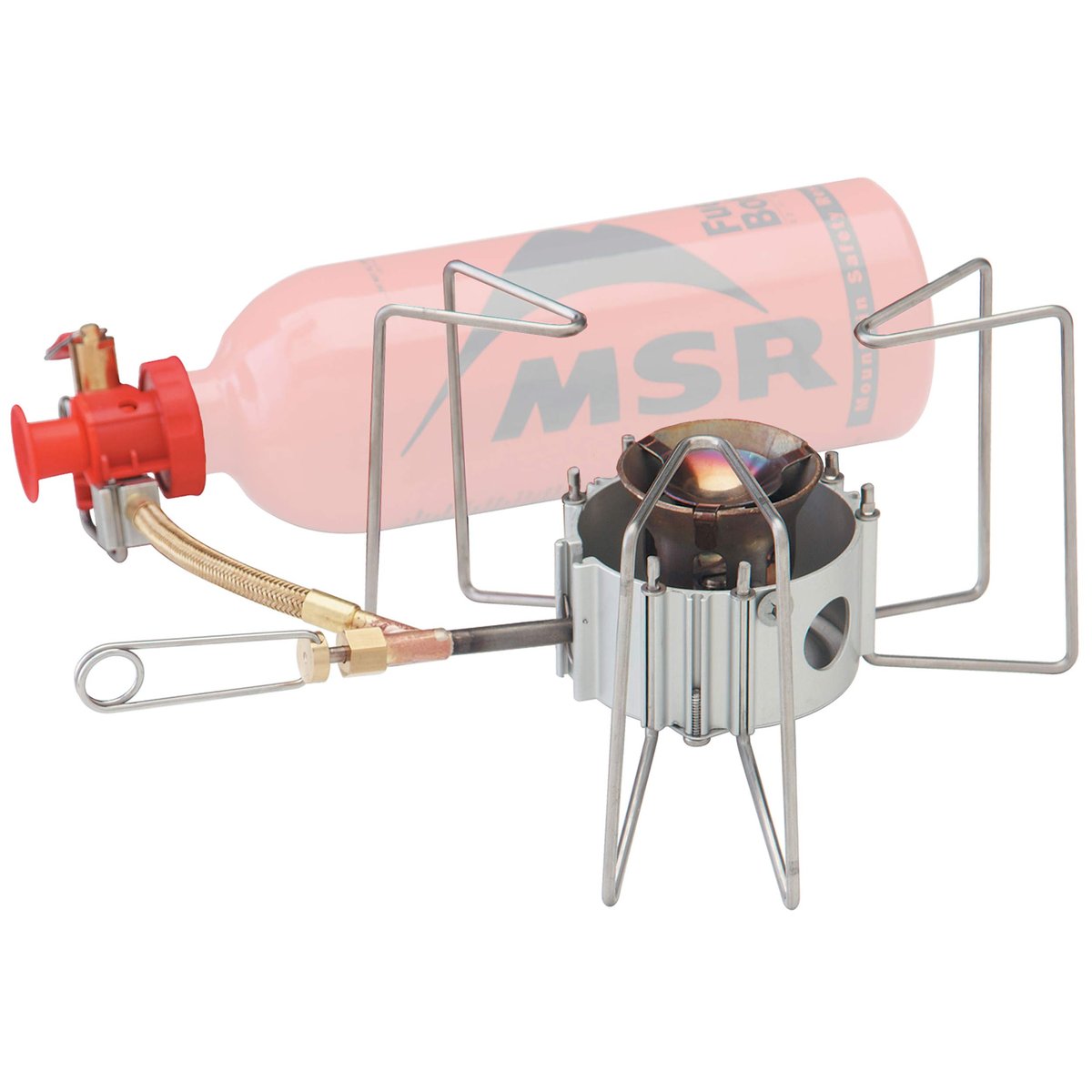
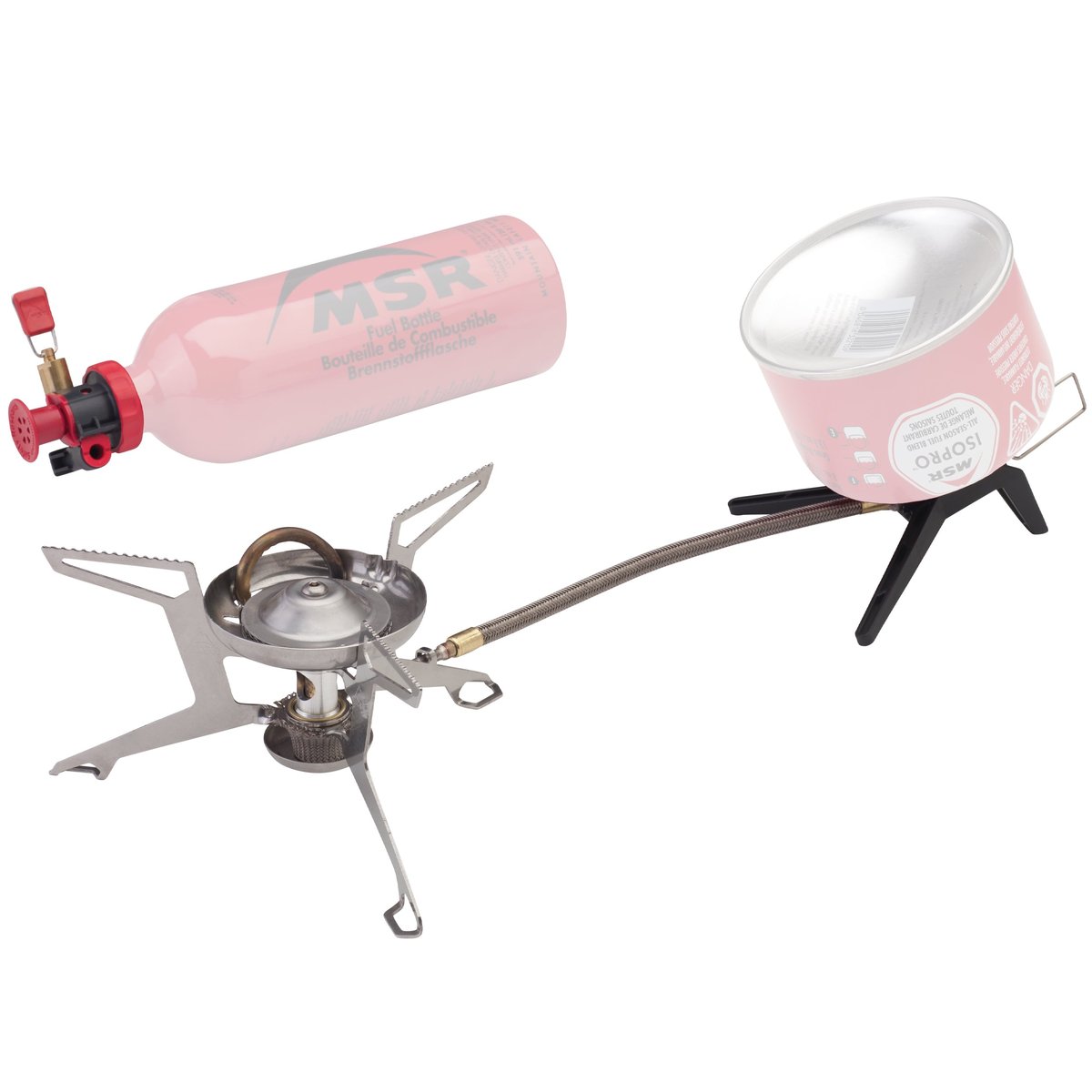
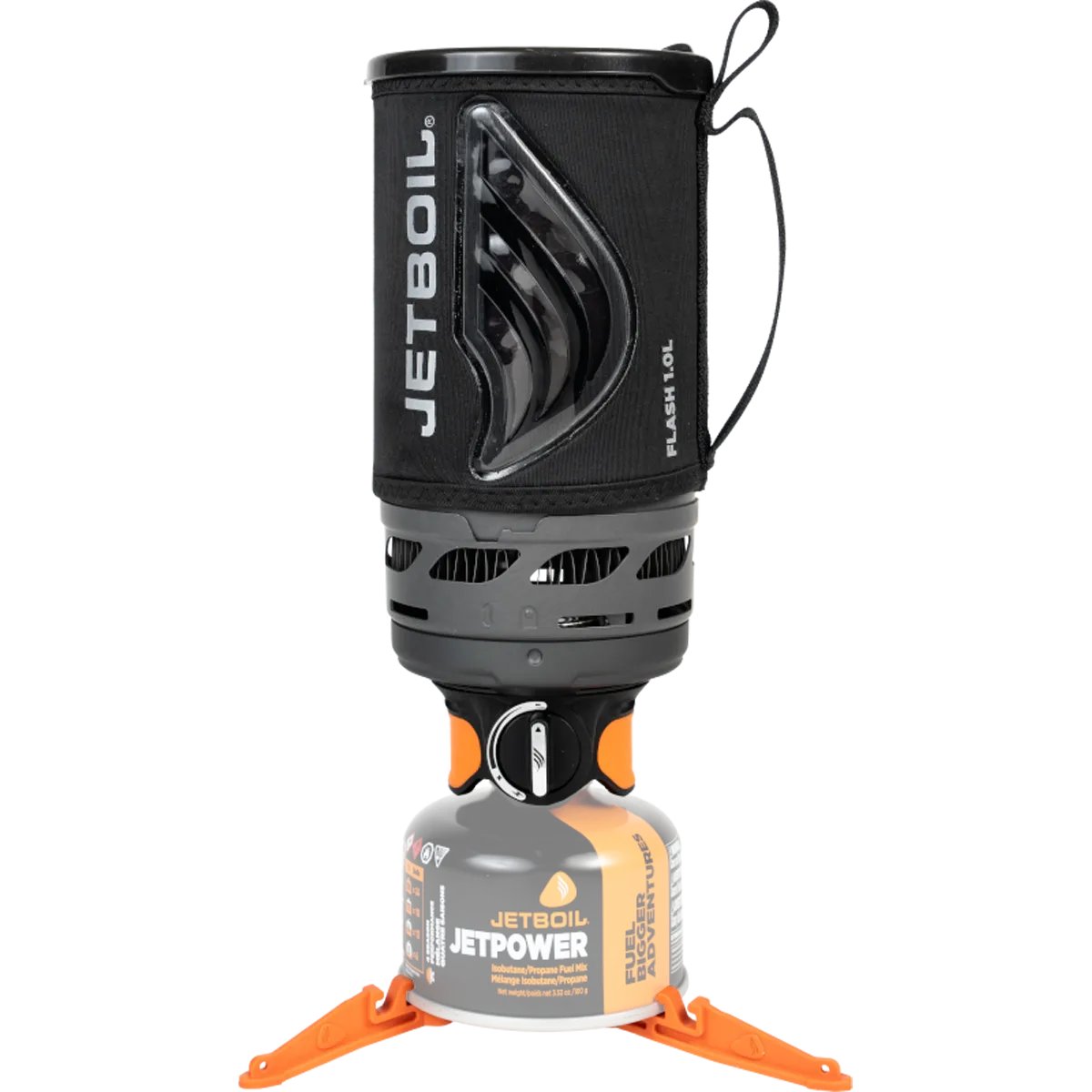
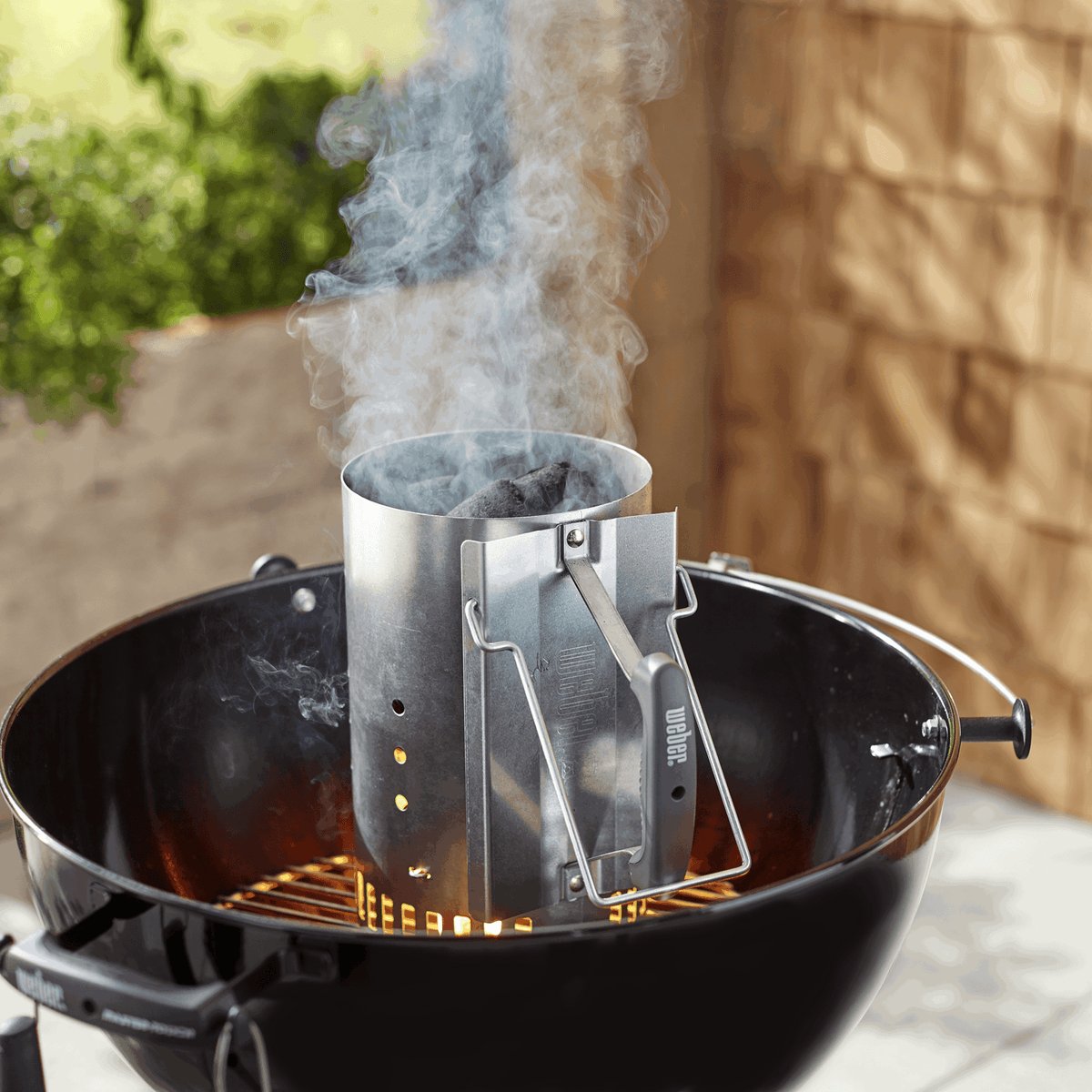
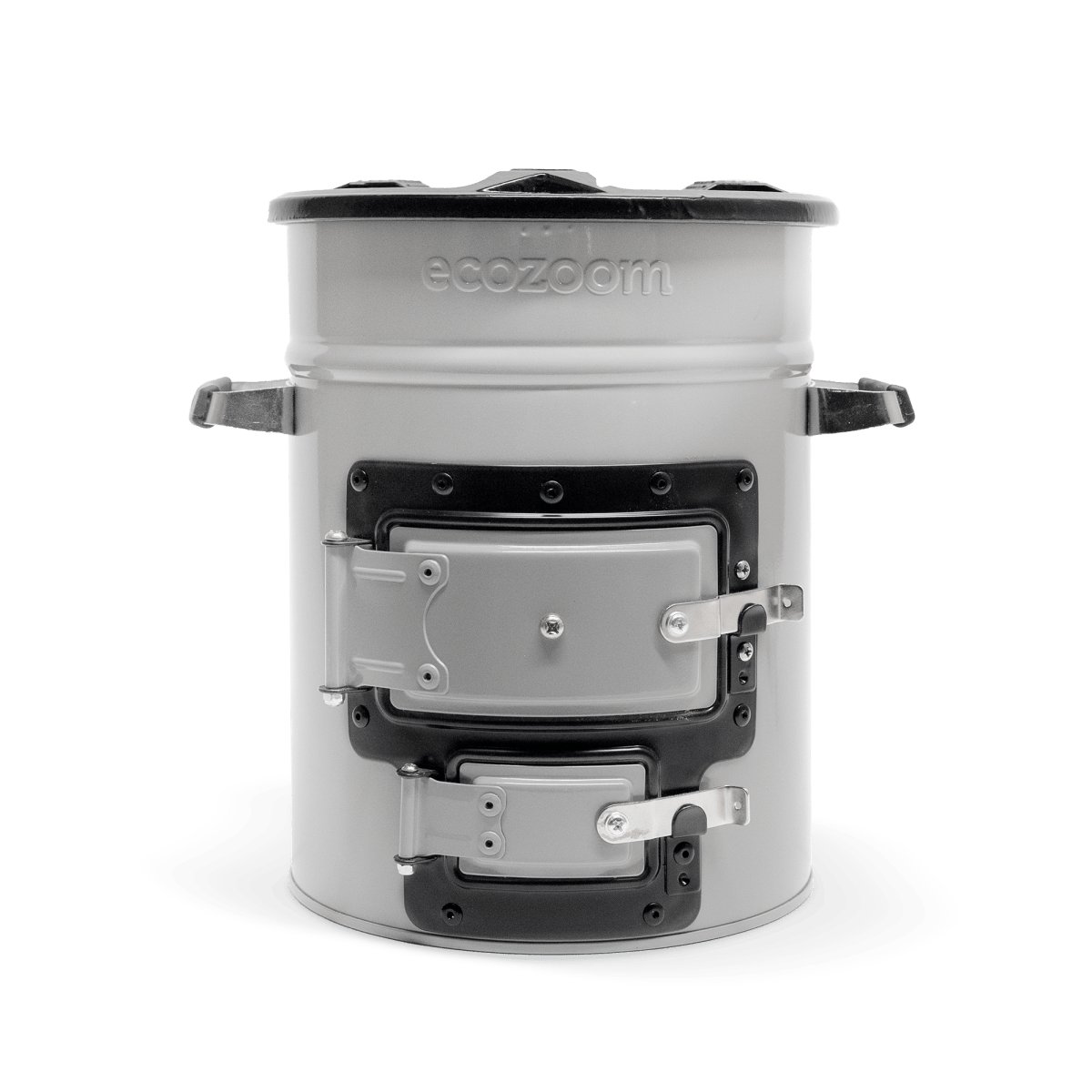
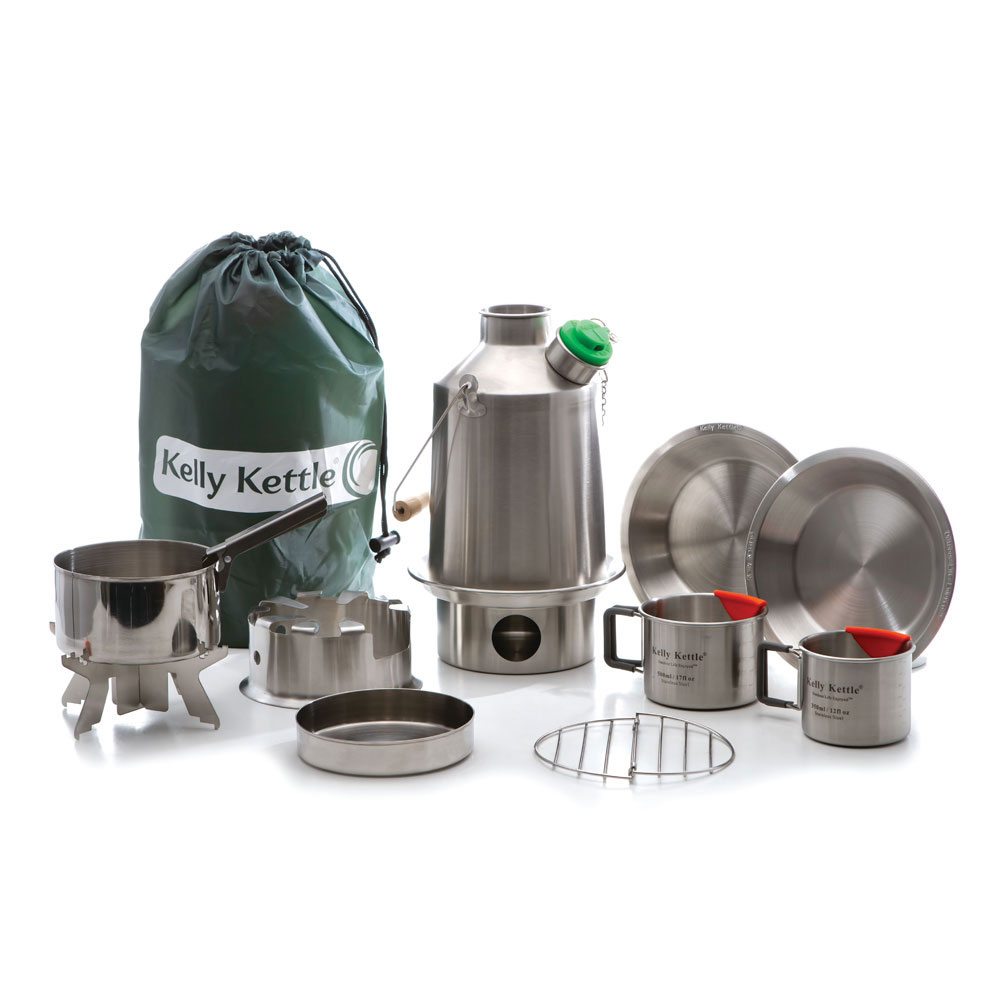
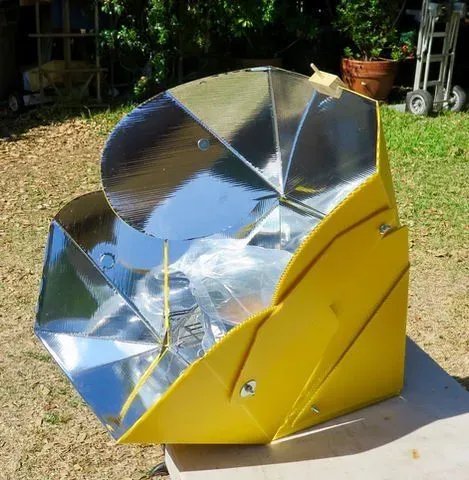
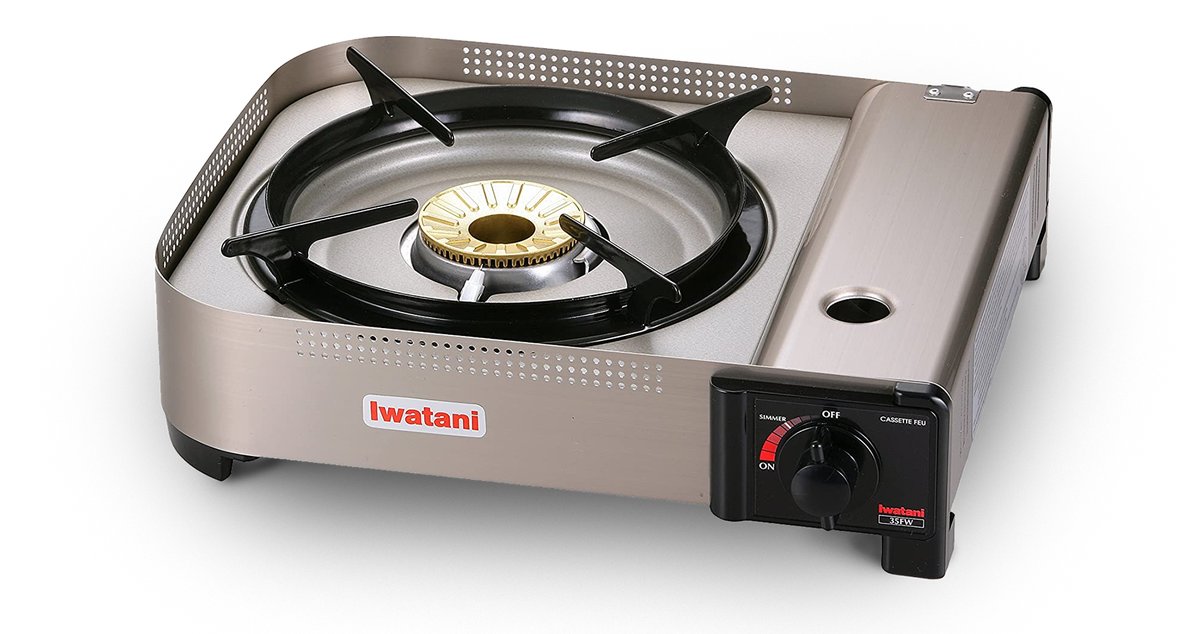
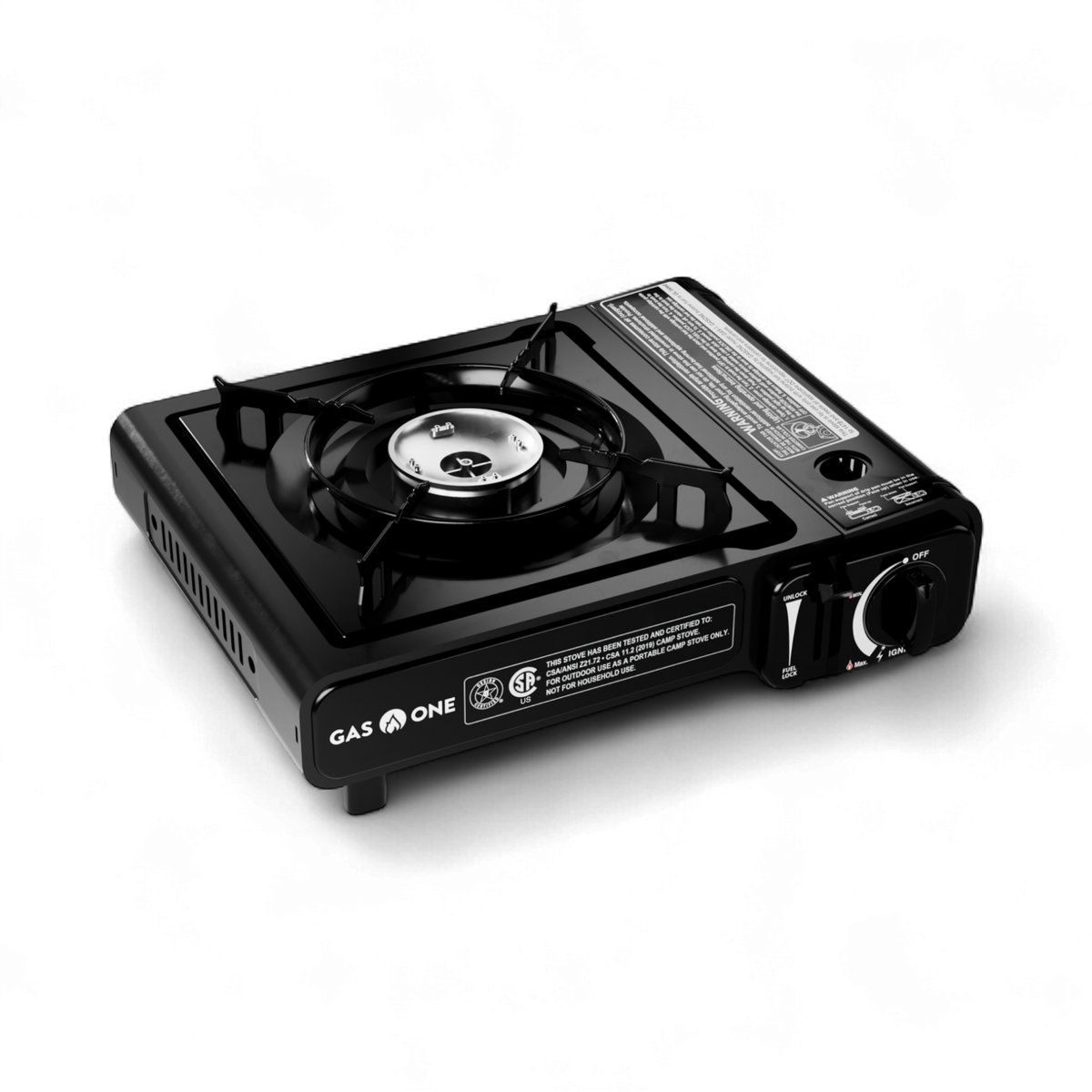
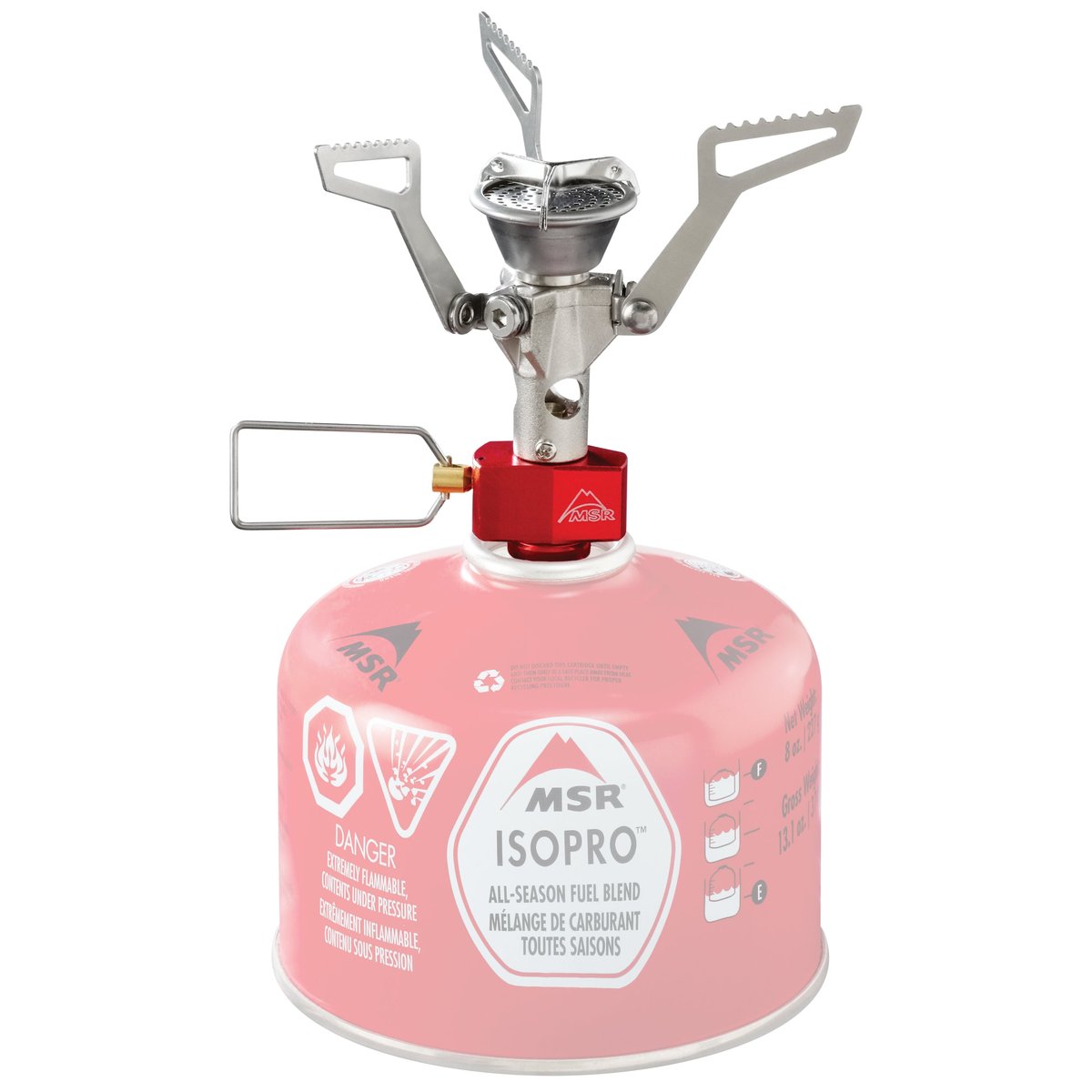
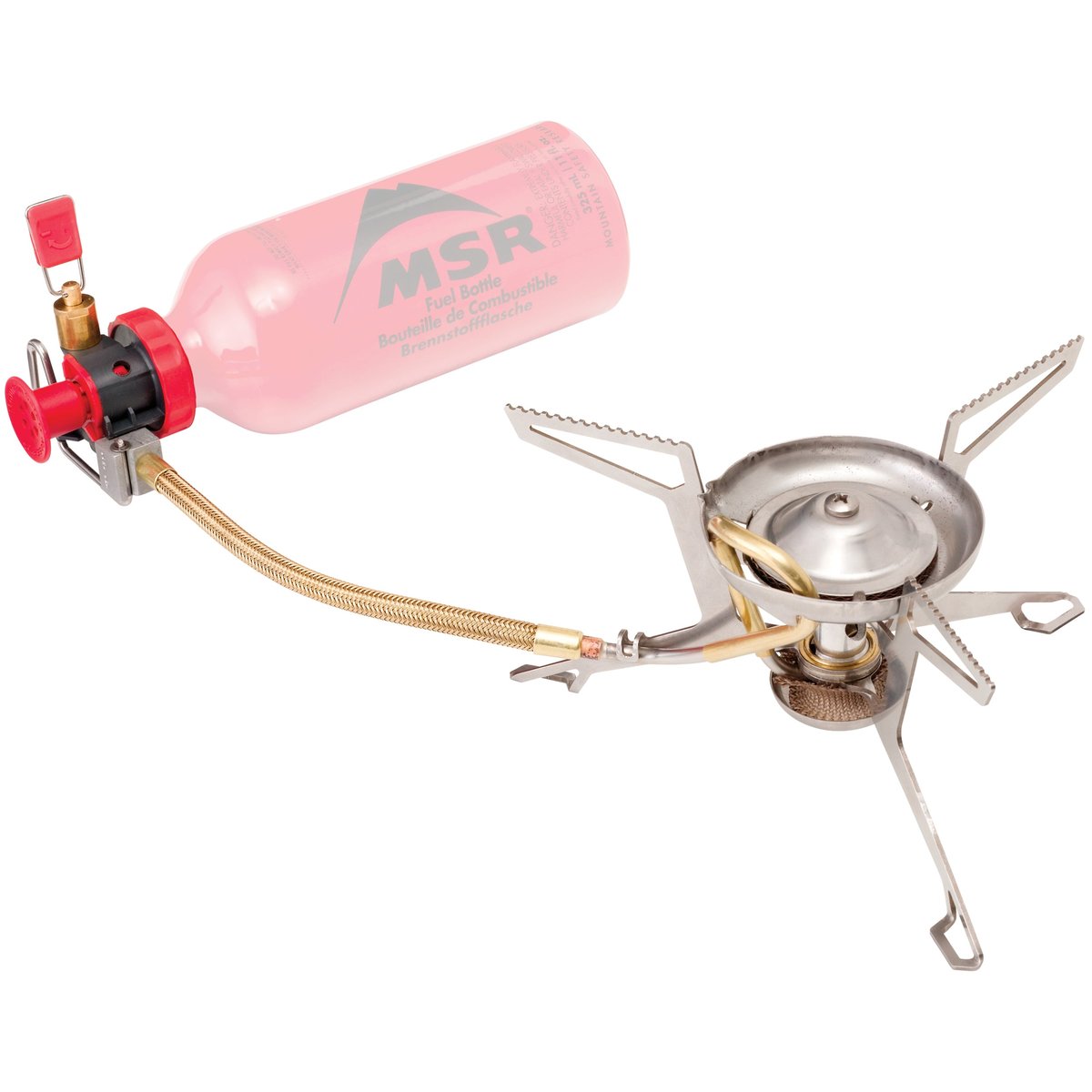
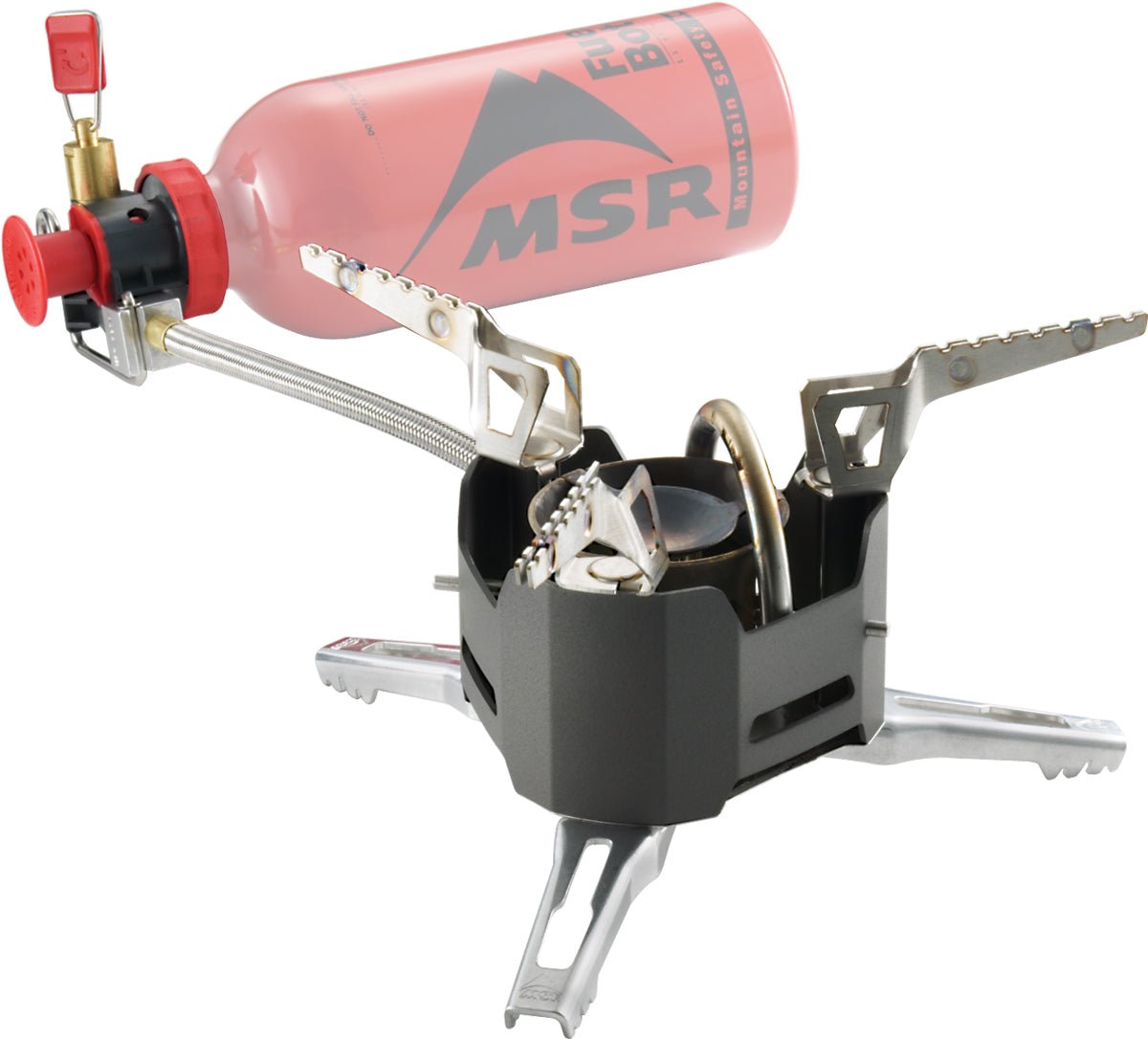
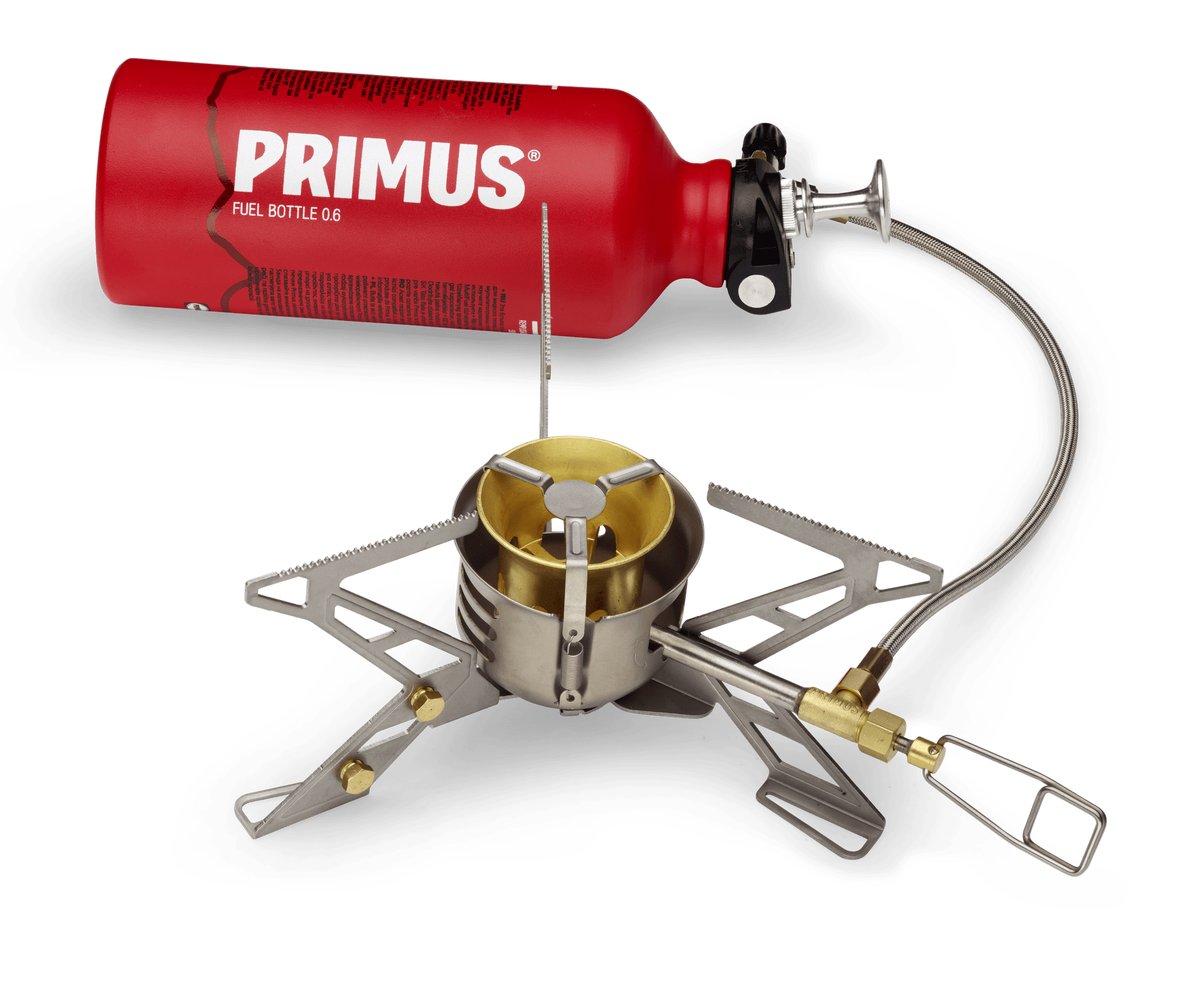
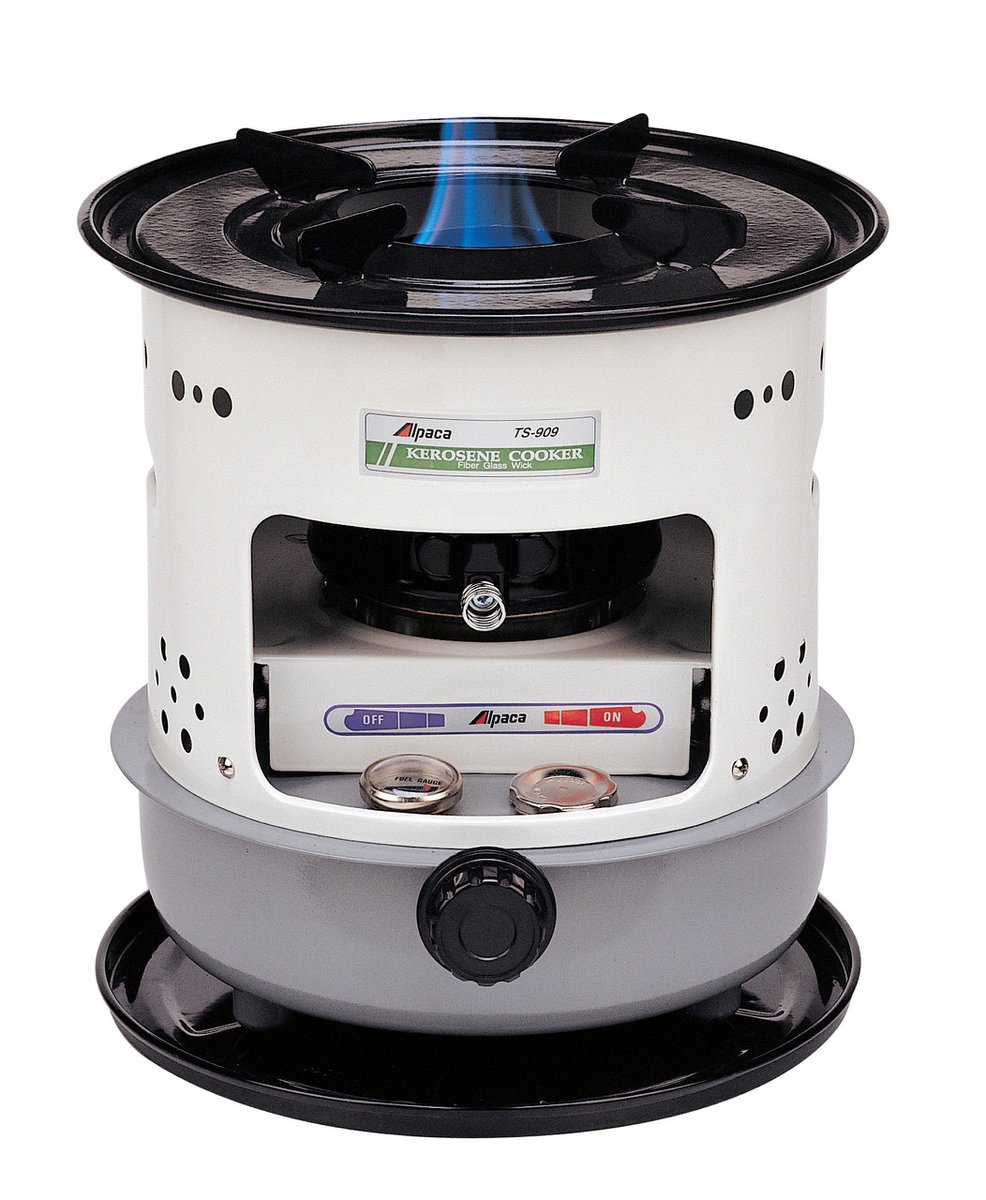
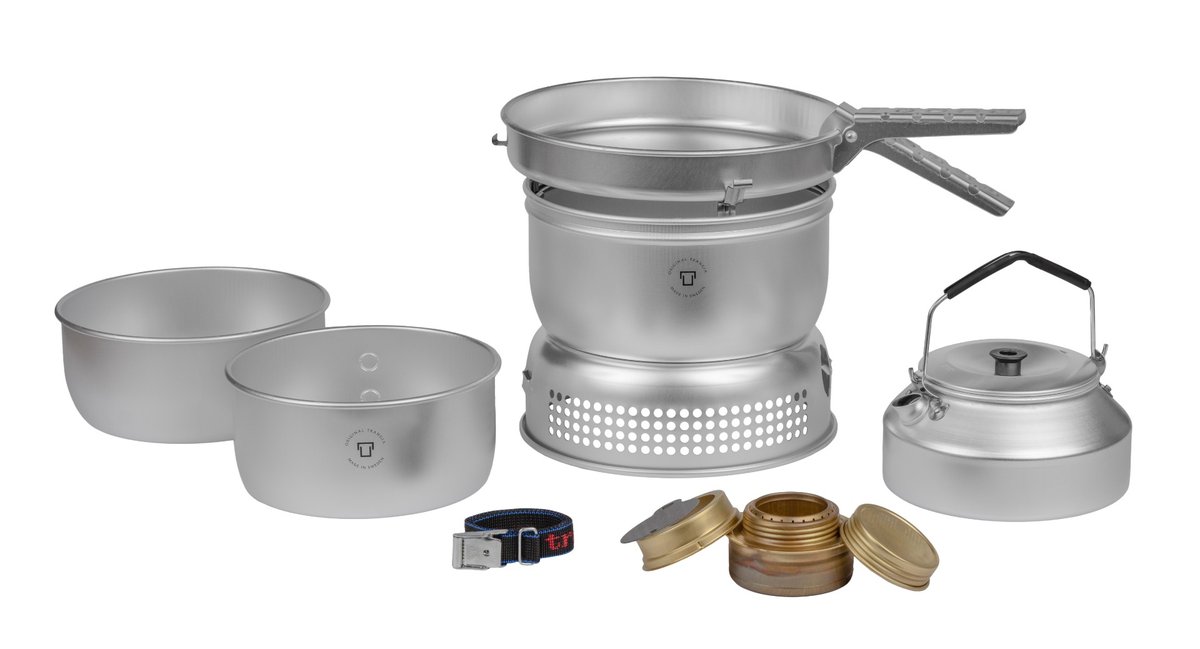
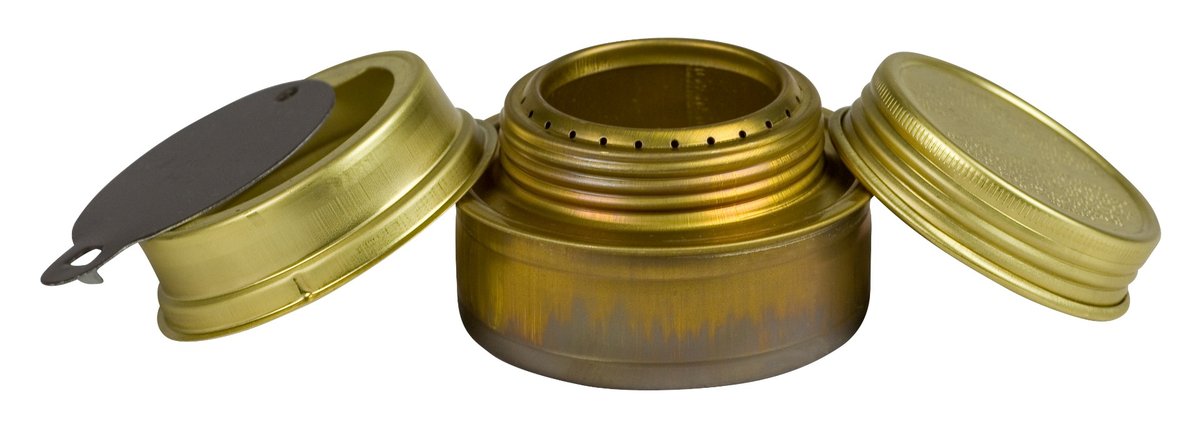
Then pick your fuel. Propane camp stoves light instantly and the one-pound cylinders store for years. Butane cassette stoves are compact and cheap, but weak below freezing. Liquid-fuel stoves run for hours on a can: Coleman's dual fuel stoves burn white gas or unleaded pump gasoline (never kerosene), while MSR's WhisperLite International and DragonFly also burn kerosene, and the DragonFly diesel. A rocket stove cooks on finger-thick sticks with a fraction of the wood of an open fire, and a solar cooker needs no fuel at all, only full sun.
Stock the fuel. Our planning estimate for one adult cooking two hot meals a day on a propane camp stove is about 8 to 14 one-pound cylinders a month. Bring food to a hard boil and finish it in an insulated box or a vacuum flask, and Aprovecho Research Center reports about half the fuel saved.