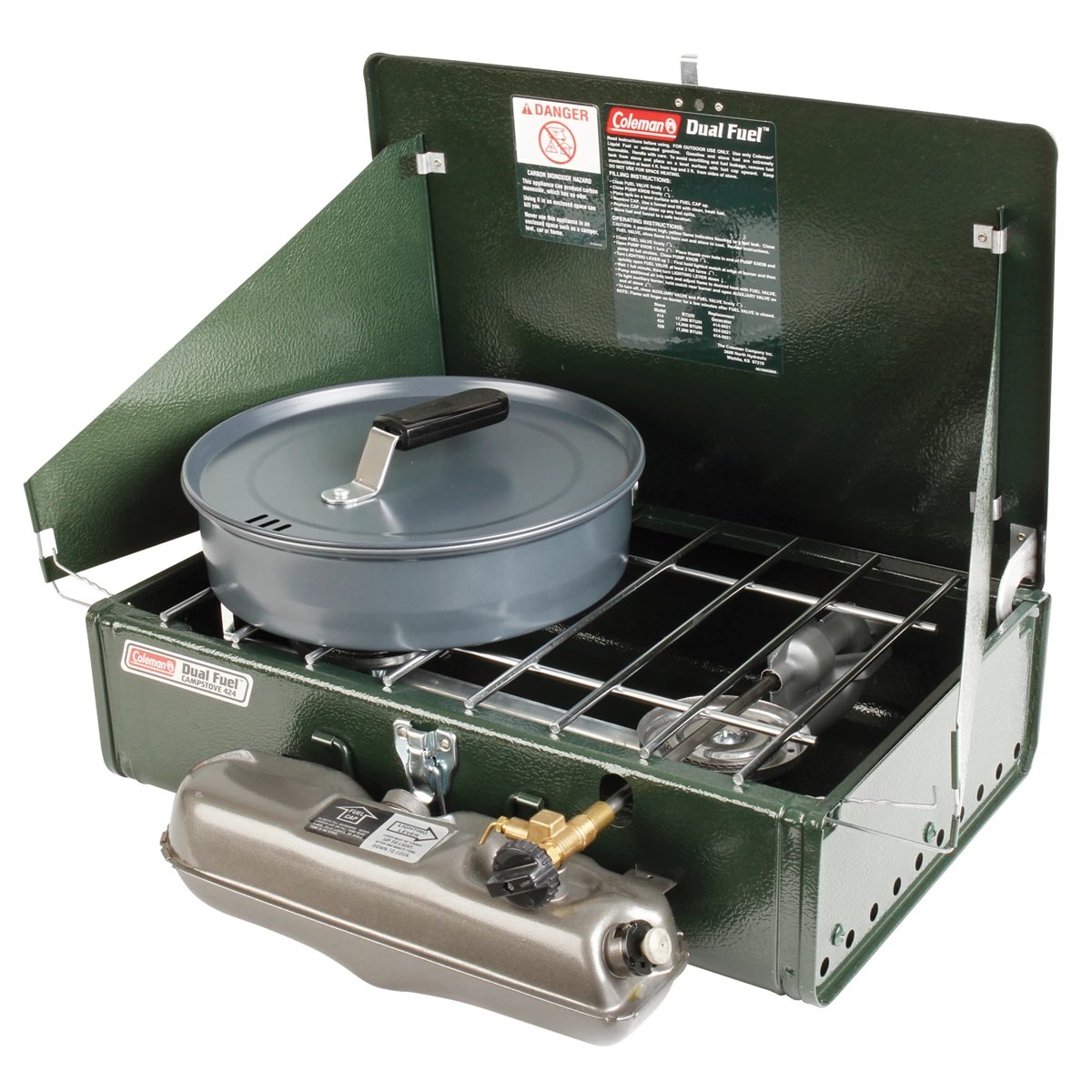
Coleman dual fuel two-burner stove
Coleman · 424
Two burners, one can of fuel, and a stove built in the USA that you can fix with your own hands.
Two-burner stove with removable chrome-plated grate and two wind guards; fuel sold separately
We earn a commission if you buy through these links, at no cost to you.
Manuals and documents
- 14,000 Btu/htotal from two burners, per Coleman
- Up to 2 hper tank, per Coleman
- 2 fuelsColeman Fuel or unleaded gasoline
- Made in USAwith a 5-year limited warranty, per Coleman
“The stove that still lights when the power, the gas line and the propane run all quit at once.”
When the power is out for days, a two-burner stove is what turns stored food into dinner. Coleman's Guide Series Dual Fuel stove does it on liquid fuel you can keep in a metal can: Coleman Fuel (white gas) or plain unleaded gasoline from the pump. Two burners mean the coffee and the eggs, or the stew and the boiling water, at the same time.
It is a pump-and-generator stove of the old school, built in the USA, and nearly every part that wears out (generator, pump cup, fuel cap) can be swapped by hand. Keep a spare generator and pump cup with it and it will outlast the next ten outages.
Two hard rules: never put kerosene in it, and only ever light it outdoors. Any stove that burns fuel makes carbon monoxide.
Other models
How to use it
- Outdoors and with the stove cool, fill the tank through a filter funnel with fresh Coleman Fuel or unleaded gasoline. Cap the tank and the can tight.
- Open the pump knob one turn, cover its hole with your thumb and pump about 30 strokes, then close the knob. Check for leaks by sight, sound and smell, never with a flame.
- With the lighting lever up, hold a lit match at the main burner and open the fuel valve. After a full minute, turn the lighting lever down and pump in a little more pressure.
- Set the flame with the fuel valve; light the second burner with a match at its edge.
- Keep anything that burns 24 in from the sides and 48 in above. Never use it inside a house, garage, camper, tent or vehicle, and never as a heater.
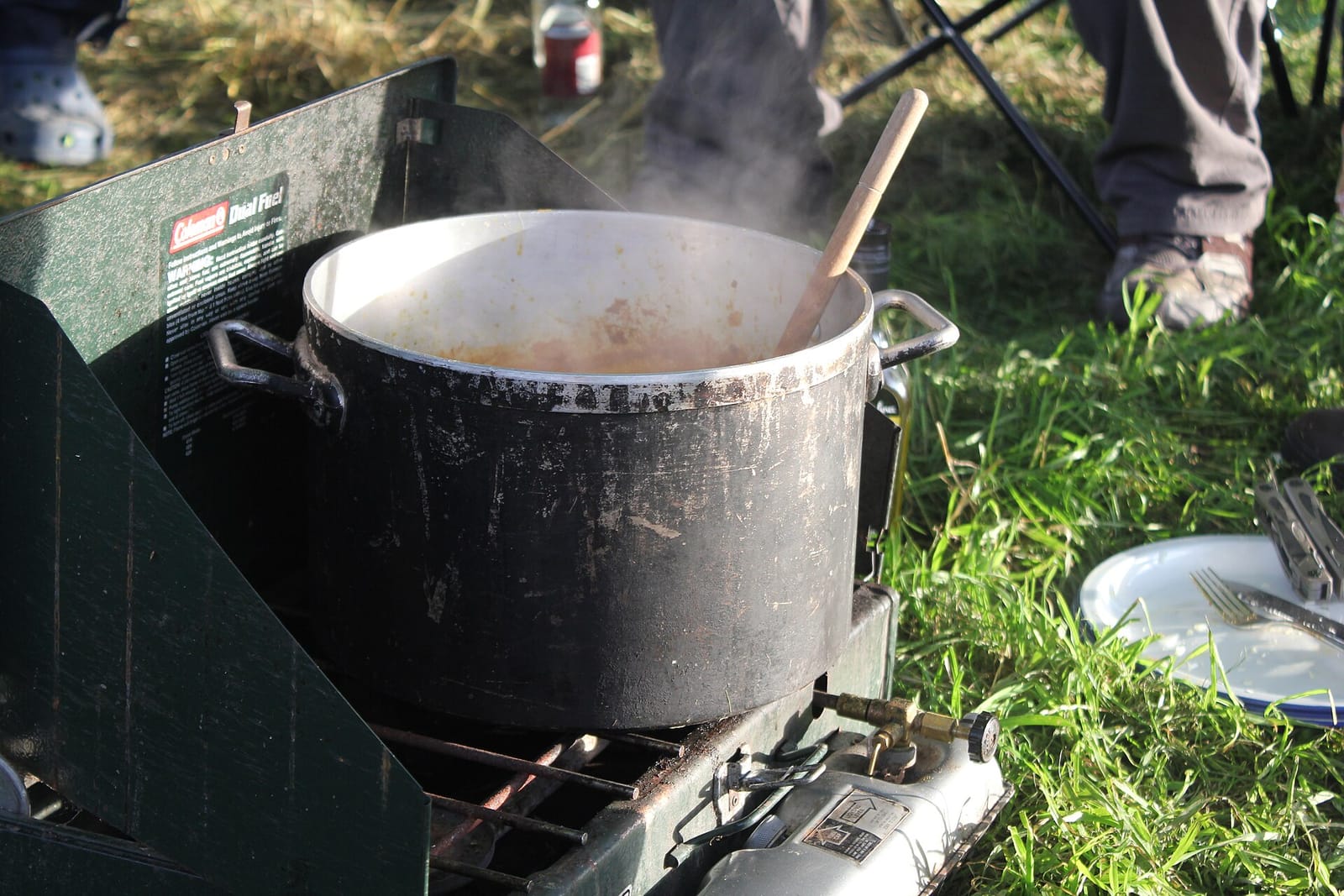
Photo: Tim Sheerman-Chase, CC BY 2.0. Credits