Wavian NATO steel jerry can
Wavian · 20 L (5.28 gal) and 10 L (2.64 gal); Red, Yellow, Blue, Olive Drab, Black
Rated 4.4 out of 5: 4.4 · 2,973 ratings
The real NATO jerry can, welded steel from Latvia, with a cap that seals in any position. Olive drab, black, blue for kerosene or yellow for diesel.
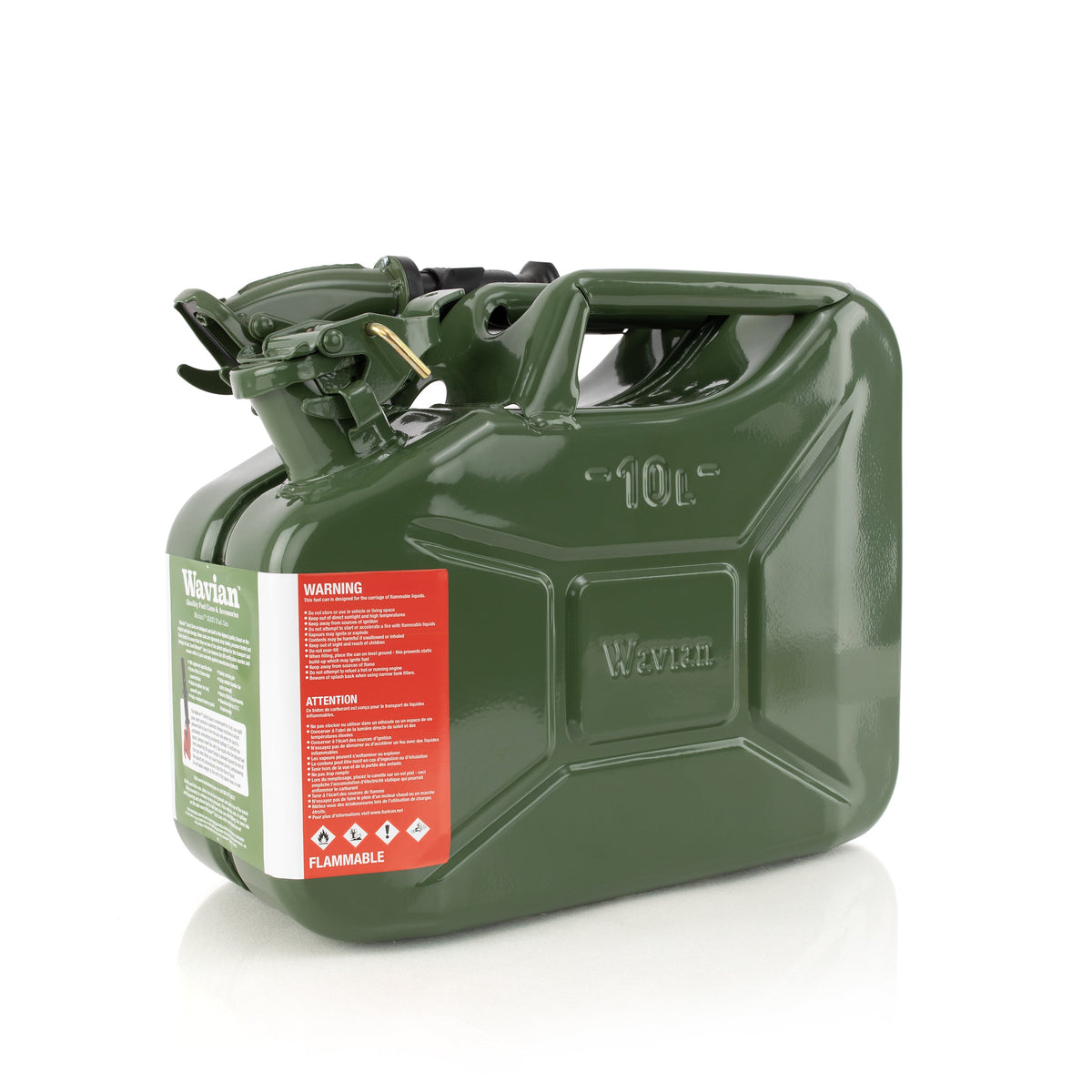
One Wavian 10 L (2.64 gal) NATO steel jerry can, olive drab, with its safety spout
We earn a commission if you buy through these links, at no cost to you.
- 0.9 mm steelfully welded, recessed seams, per Wavian
- Any positionthe bayonet cap seals upright, on its side or upside down
- 10 L2.64 US gallons, light enough to lift with one hand
- One colour per fuelso the cans never get mixed up
“A can you will hand down, holding the fuel you will be glad you stored.”
This is the can the military shape was designed around: pressed steel, welded all the way round, with recessed seams that do not catch or split when the can gets dropped. Wavian makes them in Latvia to the NATO pattern, in 0.9 mm cold-rolled steel, powder-coated outside and coated inside against fuel. The cap is a bayonet latch with a gasket: close it and the can does not leak whether it stands up, lies down or rides upside down in a truck bed.
It is a heavy, plain, overbuilt can: the kind you buy once.
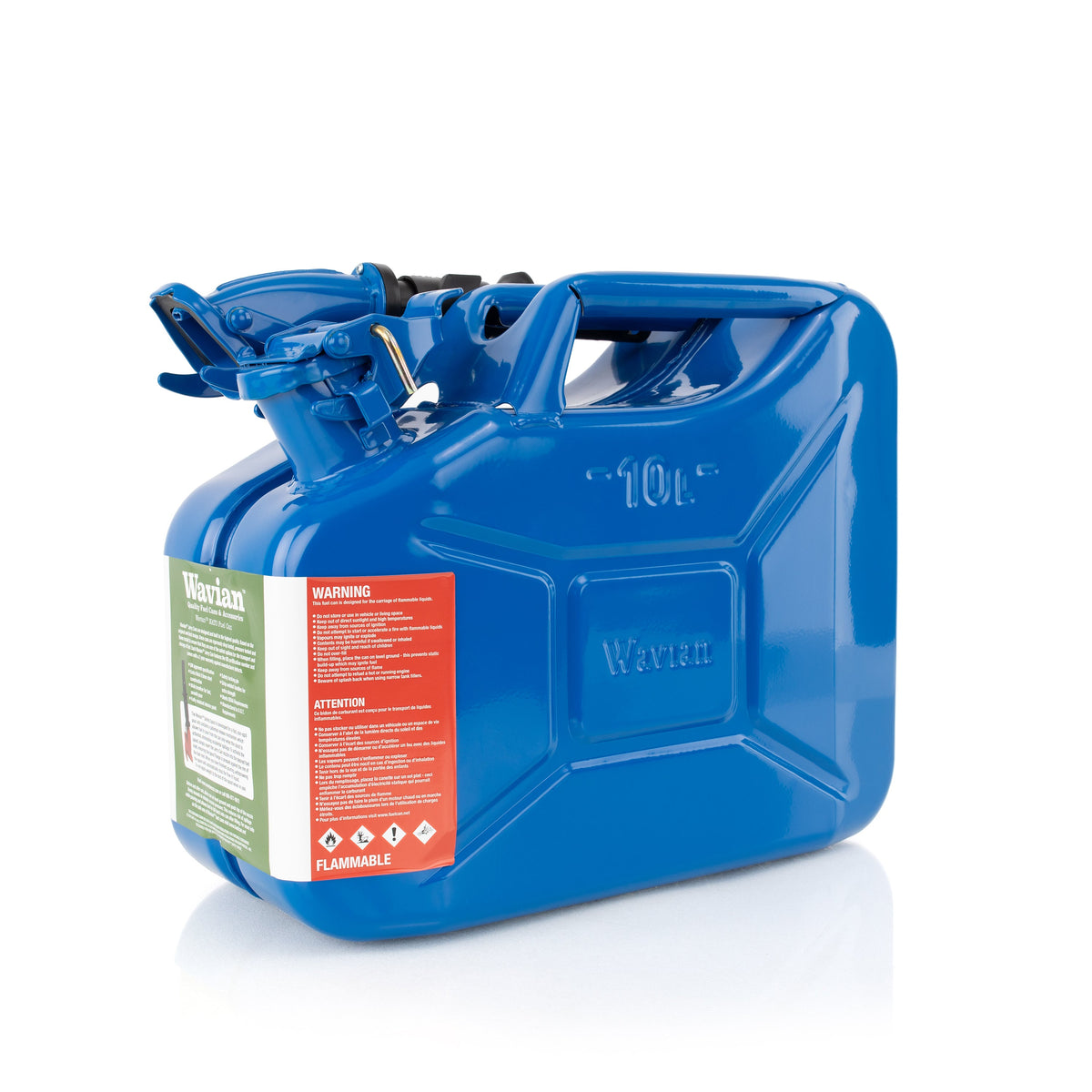
The 10 L can is sold in olive drab, black, blue and yellow. Pick a colour for each fuel and never mix them: yellow for diesel, blue for kerosene, and olive drab or black for gasoline or whatever you decide, as long as every can is labelled. A can that has ever held gasoline never holds kerosene; even a trace of gasoline in kerosene can make a heater flare.
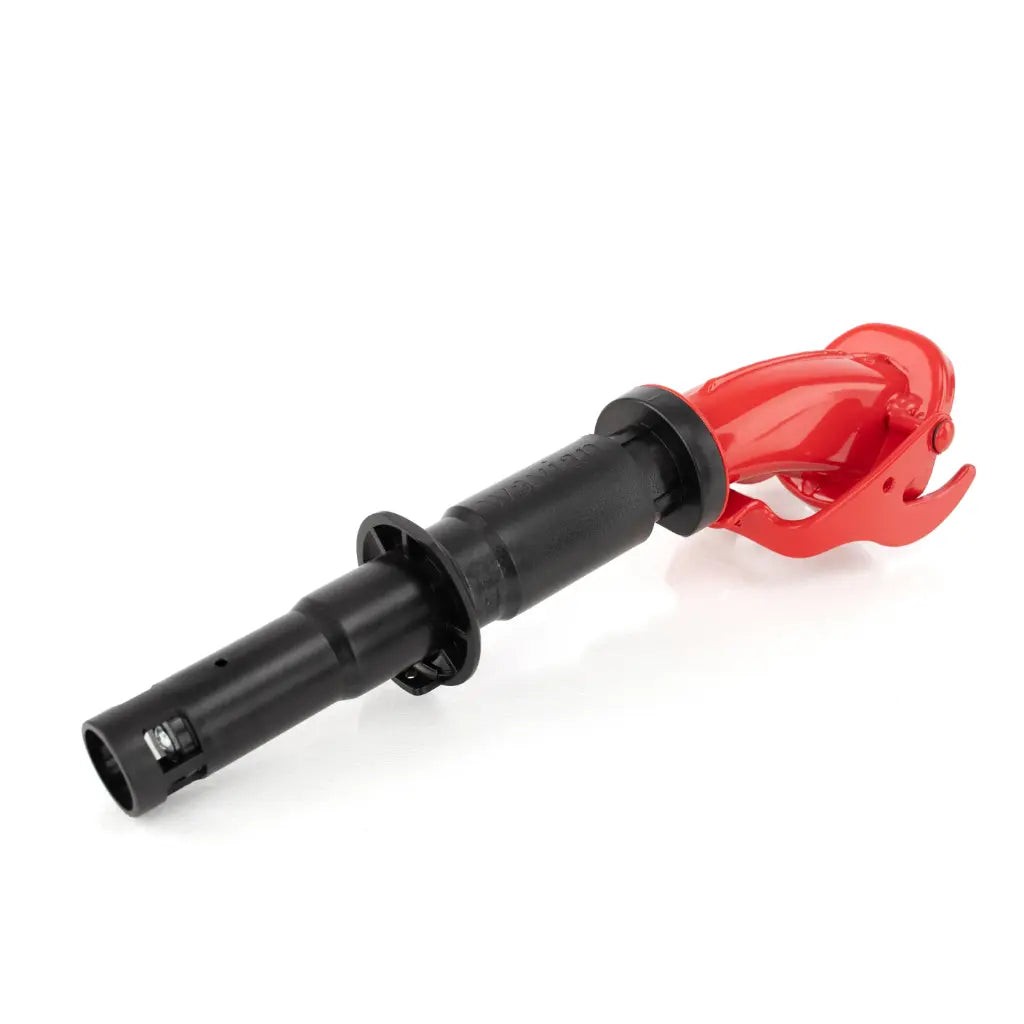
It holds 2.64 gallons, the size to lift with one hand or strap to a rack, and comes with the safety spout clipped to the can.
Store fuel outdoors or in a detached shed or garage, away from the house, and keep gasoline cans about 95 percent full with a stabilizer in it.
How to use it
- Fill the can outdoors, standing on the ground, never in a truck bed or on a carpeted floor.
- Leave a little air space; close the bayonet cap until the latch snaps down.
- To pour, take the spout off its clip, seat it in the opening and lock it, then push the nozzle into the tank to open it.
- Label the can with the fuel and the date you filled it; treat gasoline with a stabilizer.
- Check the cap gasket now and then; a worn gasket is what makes any jerry can weep.