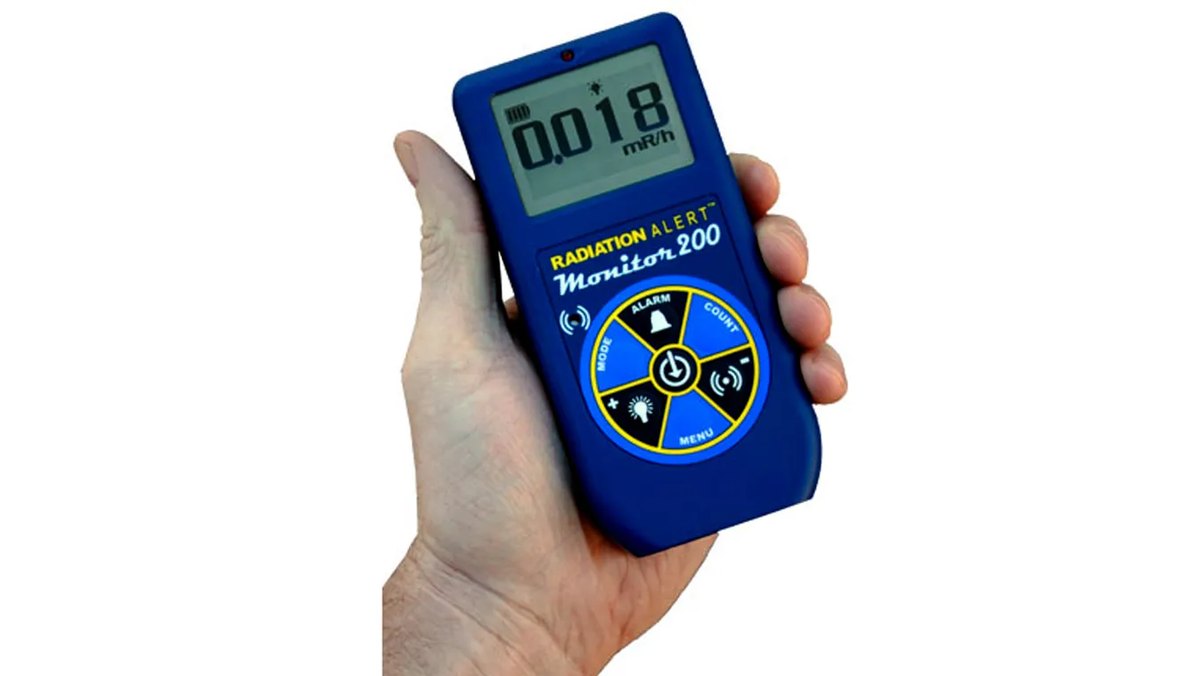
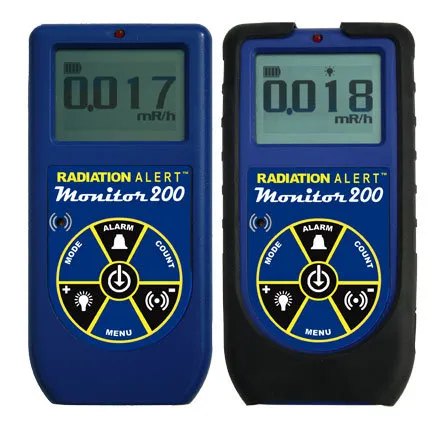
Radiation Alert Monitor 200 radiation survey meter
SE International · Monitor 200
Rated 3.3 out of 5: 3.3 · 6 ratings
Know what you are standing in. A pocket survey meter that counts alpha, beta, gamma and X-ray radiation, and sounds an alarm at the level you set.
One SE International Radiation Alert Monitor 200 survey meter with rubber boot, carrying case, lanyard, stand, two AA batteries and mini-USB cable
We earn a commission if you buy through these links, at no cost to you.
Manuals and documents
- 4 kindsof radiation measured, alpha, beta, gamma and X-ray
- 800 hourson two AA batteries at background, by SE International's figure
- Alarmyou set yourself, 70 dB loud
- 181 gabout 6 oz, small enough for a pocket
“Not something you hope to use. But if the news ever says fallout, you will want a number, not a guess.”
Radiation is invisible, silent and has no smell. A survey meter is the only way to see it. SE International builds the Radiation Alert Monitor 200 for professional monitoring in laboratories, industry and the field, and it fits in one hand.
It measures alpha, beta, gamma and X-ray radiation through a Geiger-Mueller tube with a thin mica window, and reads out in the unit you choose: counts per minute or per second, microsieverts per hour, milliroentgens per hour, or a running total. A red light flashes and a beeper clicks with every count, and you can set an alarm to sound at the level you choose. The backlit screen reads in the dark, and the readings can be saved to its memory and downloaded to a computer with SE International's free software.
It runs about 800 hours on two AA batteries at background levels, or from USB power, and comes with a rubber boot, carrying case, lanyard, stand and the batteries.
How to use it
- Put in the two AA batteries and switch it on somewhere ordinary, at home, to see your normal background reading. Write it down.
- Choose the unit you want on the display, and set the alarm level.
- Store it with spare AA batteries, in its case, where you keep your emergency radio.
- In an emergency, follow official instructions first; use the meter to compare what you read with your normal background.