Nuclear War Survival Skills (Cresson H. Kearny)
Knowledge Publications (2022 edition); Oregon Institute of Science and Medicine (1987) · Updated and Expanded 2022 Edition (ISBN 978-1-60322-070-5); 1987 edition also sold
Rated 4.6 out of 5: 4.6 · 2,240 ratings
The Cold War civil defense classic from Oak Ridge National Laboratory, in its 2022 edition with update pages on the tools you can buy today.
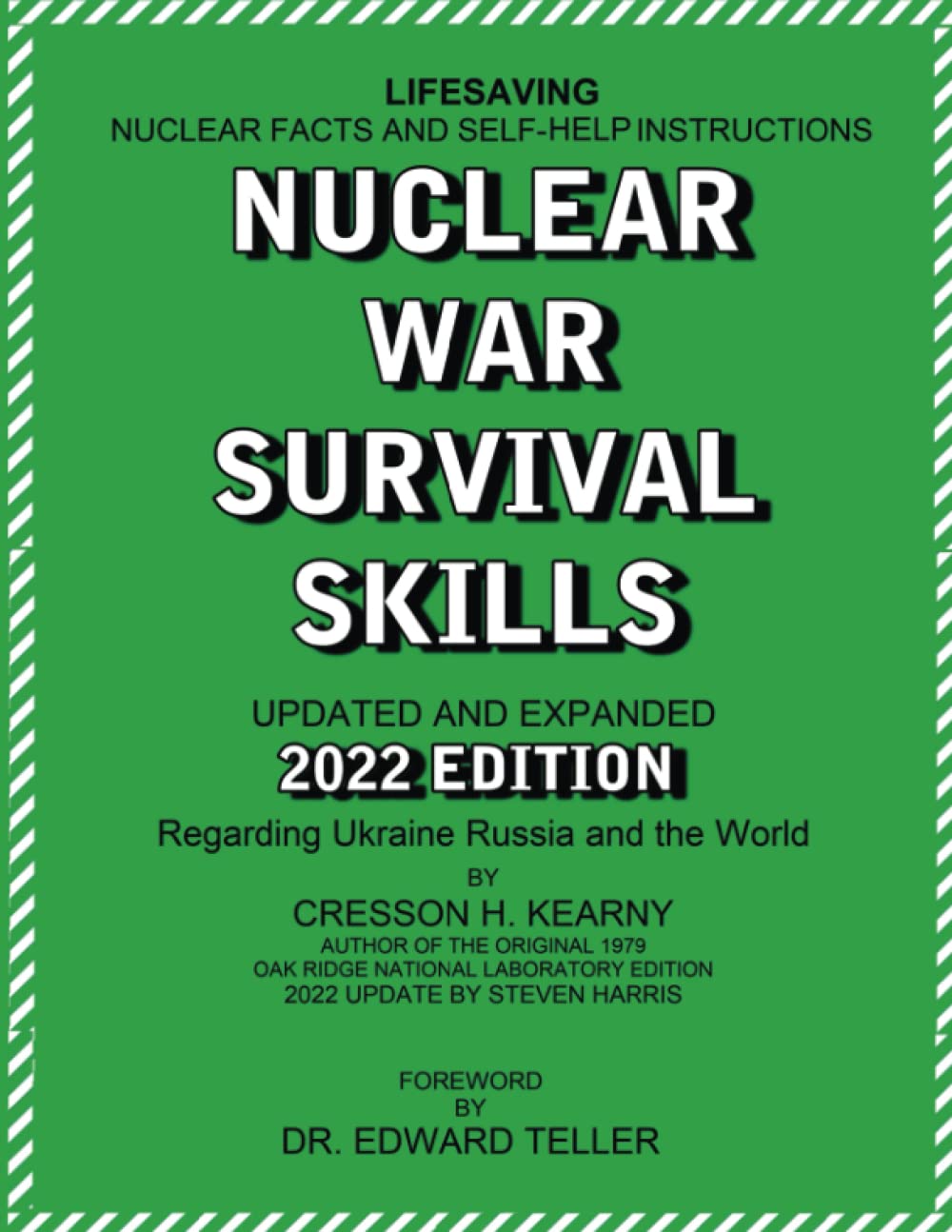
Nuclear War Survival Skills: Updated and Expanded 2022 Edition, by Cresson H. Kearny, update pages by Steven Harris, paperback, 340 pages
We earn a commission if you buy through these links, at no cost to you.
- 2022updated and expanded edition, Kearny's text unchanged
- Oak Ridgefirst published there in 1979
- 6 sheltersexpedient fallout shelter plans in appendix A
- Paperthe printed meter templates the publisher says to use
“The book you want on the shelf before the power goes out, because you cannot download it after.”
Cresson H. Kearny wrote Nuclear War Survival Skills at Oak Ridge National Laboratory, where it was first published in 1979, and updated and expanded it himself in 1987, with a foreword by Dr. Edward Teller.
The newest edition is the 2022 edition. Steven Harris, whom Kearny mentored for years, left Kearny's text exactly as it was and added update pages beside it: LED lights and lithium batteries next to Kearny's cooking oil lamp, the affordable radiation meters you can buy now, cardboard boxes where Kearny's bucket stove burned twisted newspaper, and what a detonation on the other side of the world means here, when the news reaches every phone at once. Buy the paperback: the publisher says the hardcover sold on Amazon under the same title is the 1987 text.
Want Kearny's text alone? The 1987 edition from the Oregon Institute of Science and Medicine, the publisher Kearny worked with, is the same book without the update pages, for less.
It is a practical book for ordinary families, and it covers what a radiation emergency actually demands: separating the myths from the facts about the dangers, warnings, shelter, keeping air moving through a shelter, water, food, sanitation and measuring fallout with a meter you build yourself. Appendix A gives instructions for six expedient fallout shelters.
Why buy paper when the 1987 text is online for free? Two reasons. A book on the shelf works when the internet does not. And the publisher itself warns that the online templates and illustrations for the fallout meter are not entirely reliable and should be taken from the printed version.
Today's official advice for a radiation emergency is short: get inside, stay inside and stay tuned, and follow what emergency officials tell you. Read this book before you need it; it is the background, and the officials' instructions come first.