N95 respirators
Rated 4.4 out of 5: 4.4 · 163 ratings
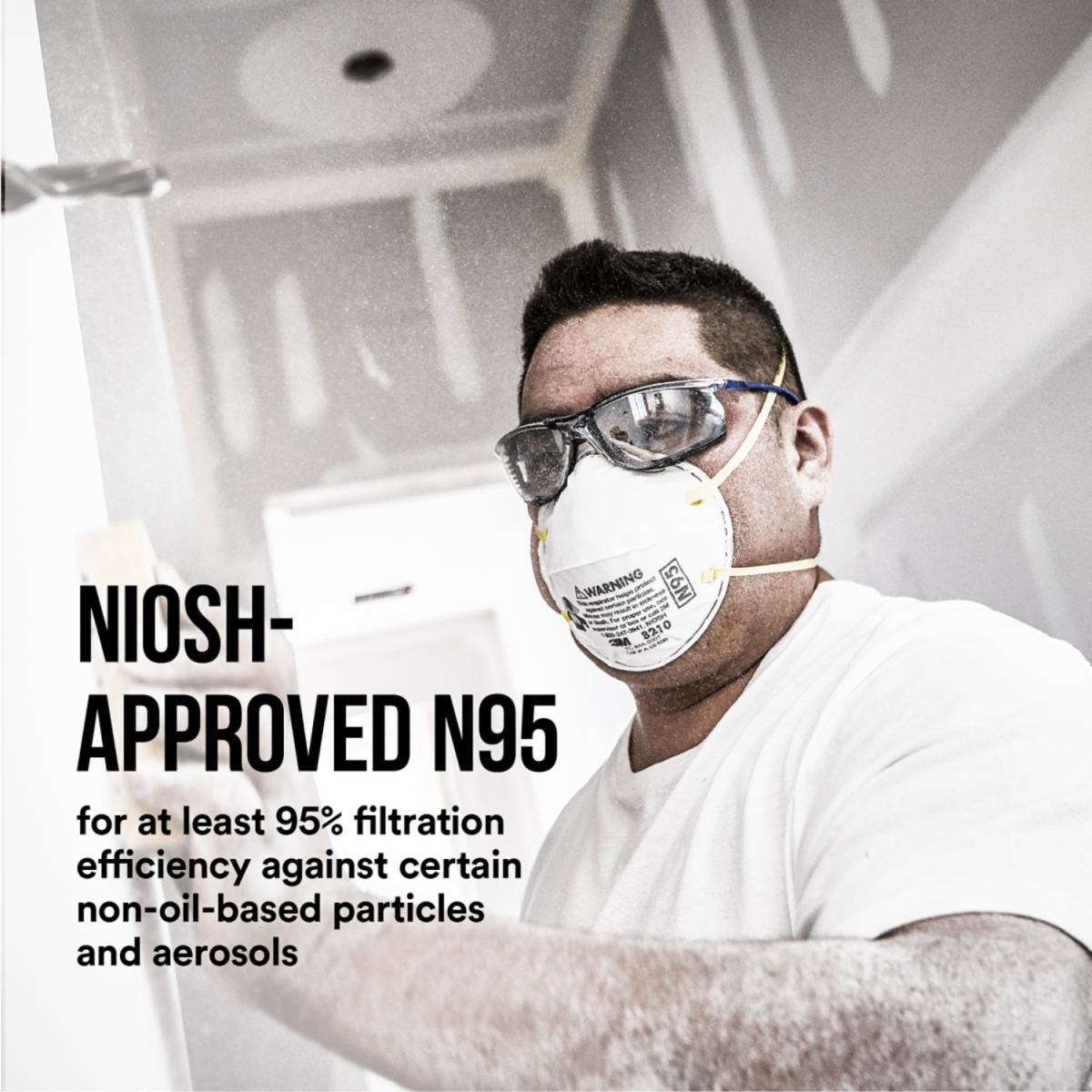
The plain white 3M 8210 in the box of 20 FEMA's kit list has in mind. NIOSH-approved, no valve, no gimmicks.
Twenty 3M 8210 N95 particulate respirators, one size fits most
We earn a commission if you buy through these links, at no cost to you.
Manuals and documents
- N95NIOSH-approved, per 3M
- 20respirators in the box
- 95%at least, of certain non-oil-based particles, per 3M
- 5 yearsshelf life, per 3M
“A box of twenty on the shelf costs less than one trip to the store in the middle of the mess.”
FEMA's kit list includes N95 respirators, and the reasons pile up fast: ash and dust after a fire or a collapse, mold after a flood, wildfire smoke, and the dust masks the radiation guidance lists next to the waterproof gloves for cleaning up. When you need one, the stores are the last place you want to be.
The 3M 8210 is the classic: a white cup respirator that 3M says is NIOSH-approved as an N95, filtering at least 95 percent of certain non-oil-based particles and aerosols. A cushioning foam strip sits on the bridge of your nose, the adjustable noseclip and two stretchable headbands make the seal, and there is no exhalation valve. 3M gives it a five year shelf life.
Know what it is not. An N95 filters particles; it does not filter gases or vapors, so it does not make it safe to stay in smoke, near a running generator or in a chemical cloud. It does not seal over a beard or heavy stubble. And NIOSH-approved respirators are not made in sizes for very young children: for them, the clean room is the protection, not a mask.
How to use it
- Hold the respirator in your hand, nosepiece at your fingertips, straps hanging below.
- Put it against your face, nose clip on top, covering nose and chin.
- Pull the top strap over your head to sit high on the back of the head, and the bottom strap to the back of the neck, below the ears. Do not cross the straps.
- With the fingertips of both hands, press the metal nose clip from the top, sliding down both sides to mold it to your nose. Do not pinch it with one hand.
- Seal check: cup both hands over it and breathe out gently. It should bulge a little, with no air leaking at the edges and no fogging of your glasses. If it leaks, adjust and check again.
- Try one on each adult before you need it. A respirator that does not seal on your face is the wrong one for you.