Hacksaw
Rated 4.6 out of 5: 4.6 · 611 ratings
Pipe, bolts, strapping and a padlock with no key. A hacksaw cuts the metal nothing else in the toolbox will.
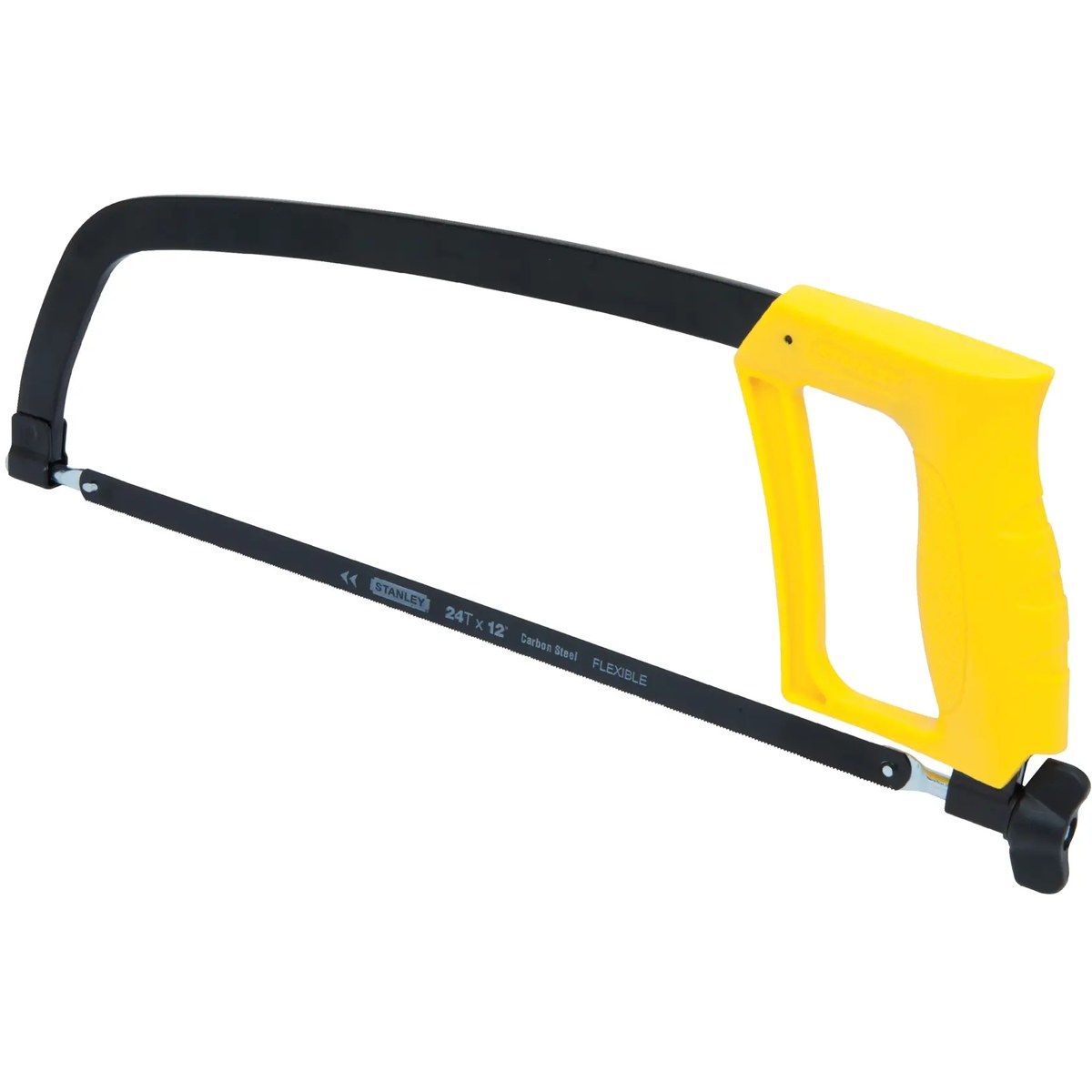
Stanley 12 in D-shape hacksaw with one 24 tpi carbon steel blade (STHT20138)
We earn a commission if you buy through these links, at no cost to you.
- 225 lbof blade tension, per Stanley
- 12 inblade, 4.375 in cutting depth
- 90 and 180°blade positions for flush cuts
- Lifetimelimited warranty, per Stanley
“Keep a pack of spare blades taped inside the frame; the first one always breaks.”
After a storm the jobs that stall are the metal ones: a bent pipe that has to come out, a rusted bolt that will not turn, a strap holding a fallen gutter, a padlock whose key went with the flood. A hacksaw cuts all of them, by hand, with no power and no sparks.
Stanley's D-shape frame is solid steel and holds the blade at up to 225 lb of tension, so it cuts straight. Turn the blade to 90 or 180 degrees to cut flush against a wall. Buy a pack of spare blades with it: 18 teeth per inch for thick bolts and pipe, 24 for thin tube and sheet.
How to use it
- Fit the blade with the teeth pointing away from the handle and tighten the knob until the blade is taut.
- Clamp or hold the work firmly, and start the cut with a few light pull strokes to make a groove.
- Cut on the push stroke with long, steady strokes, using the whole blade; at least three teeth should always be on the metal.
- Ease off as you finish so the blade does not snap, and keep the spare blades dry in their packet.