Fuel cans 5 gal gasoline and kerosene
Rated 4.7 out of 5: 4.7 · 10,475 ratings
Steel safety cans that close themselves, with a flame arrestor in the neck. Red for gasoline, blue for kerosene, and never the twain shall meet.
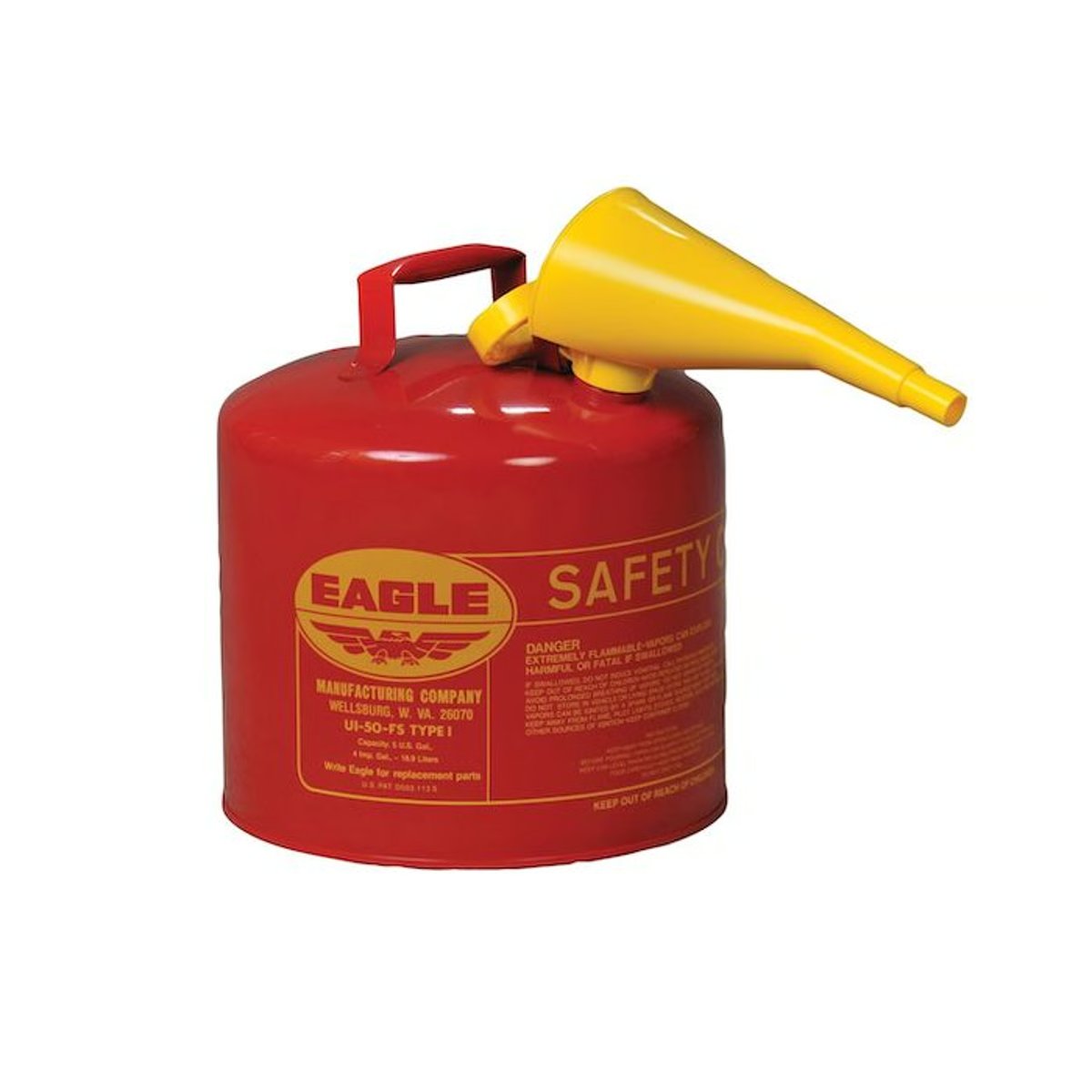
One Eagle UI-50-FS Type I galvanized steel safety can, 5 gal, red, for gasoline, with funnel
We earn a commission if you buy through these links, at no cost to you.
Manuals and documents
- Type Isteel safety can with a flame arrestor
- OSHA and NFPA 30meets OSHA 1910.106 and NFPA 30, per Eagle
- 5 galeach, the usual consumer size
- Red and bluered for gasoline, blue for kerosene only
“The generator and the heater are only as good as the fuel you stored for them, and the can you stored it in.”
The generator needs gasoline and the kerosene heater needs kerosene, and the day you need either is the day the stations are dark. What you stored is what you have. Store it in cans built for it: steel Type I safety cans whose caps close themselves and vent pressure, with a flame arrestor in the neck. Eagle says its can meets OSHA 1910.106 and NFPA 30 and is FM, UL and ULC approved.
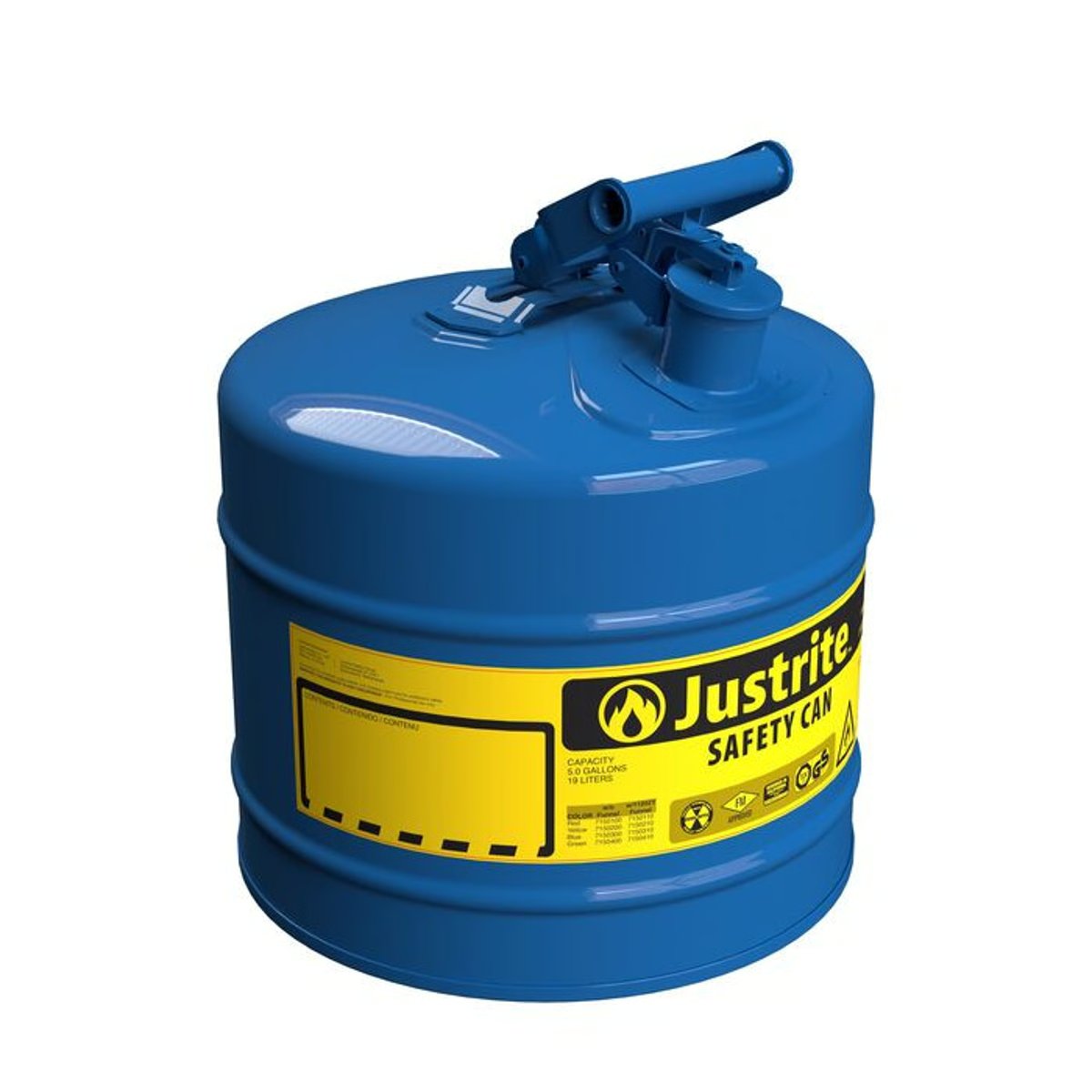
Keep the colors straight, every time. Red is gasoline. Blue is kerosene, and that can holds kerosene and nothing else, ever: even a trace of gasoline in kerosene can make a heater explode. Never put kerosene in a can that has held gasoline. Label every can.
Fuel lives outside the living space: in a well-ventilated shed or detached garage, away from children, out of the sun, away from any flame, pilot light or electrical panel. Never in the basement. One fire department recommends no more than 5 gallons of gasoline at a home; check your local code, and remember that an empty can counts as full.
How to use it
- For storage, fill gasoline to about 95 percent: room to expand, little air to condense. Add stabilizer to any gasoline you will keep more than 30 days.
- Fill the blue can with water-clear 1-K kerosene only, and use that can for nothing else.
- Carry cans upright in a ventilated spot and take them out of the vehicle as soon as you arrive. Never leave a can in direct sun or a hot car.
- Store them in a ventilated shed or detached garage, away from the house. Rotate the fuel: use the oldest first and refill.