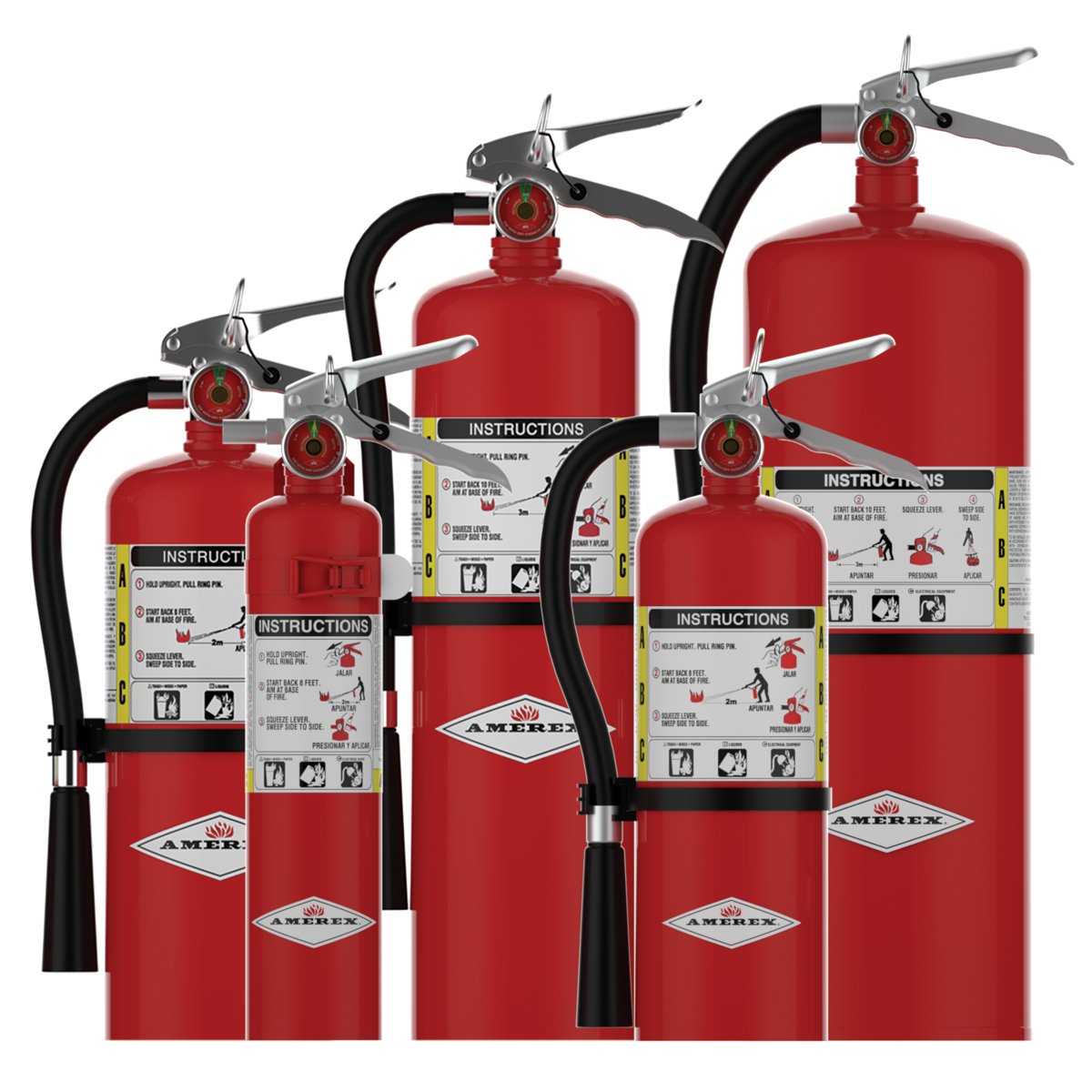
Fire extinguisher ABC 5 lb
Rated 4.7 out of 5: 4.7 · 5,345 ratings
The one tool that lets you stop a fire while it is still small. Five pounds of ABC dry chemical, a brass valve and a gauge you can read at a glance.
One Amerex B402 5 lb ABC dry-chemical extinguisher with wall bracket
We earn a commission if you buy through these links, at no cost to you.
Manuals and documents
- 3-A:40-B:CUL rating of the B402, per Amerex
- 5 lbof ABC dry chemical, light enough to lift and aim
- Brass valveall-metal valve on a drawn-steel cylinder, per Amerex
- 6 yearsmanufacturer's warranty, per Amerex
“Hang it by the door you would run out of, not next to the stove, and show everyone in the house where it is.”
When the power is out, candles, lanterns, camp stoves and heaters come into the house, and the fire department may be slow or not coming at all. A small fire in a pan or a wastebasket is the one you can stop yourself, if the extinguisher is where you can reach it.
An ABC extinguisher covers most home fires: ordinary combustibles (A), flammable liquids such as grease, gasoline and kerosene (B), and energized electrical equipment (C). The numbers on the label tell you how much fire it can handle: the number before the A is a multiple of 1.25 gal of water, and the number before the B is the square feet of liquid fire it can put out (USFA). Buy the largest one you can lift and aim. The Amerex B402 carries a 3-A:40-B:C rating in a 5 lb unit; the B500 is 2-A:10-B:C. Both have Amerex's all-metal brass valve and a pressure gauge.
Keep one ABC extinguisher per floor, on the way out, not behind the thing that will burn.
How to use it
USFA says fight the fire only if every one of these is true: everyone else is alerted and leaving, the fire department has been called (or someone is sent for help), the fire is small and contained to one object, you are not breathing smoke, you have a clear exit at your back, and you are able to handle the extinguisher. If any answer is no, get out.
- Pull the pin, nozzle pointed away from you.
- Aim low, at the base of the flames, from the range printed on the label.
- Squeeze the handle slowly and evenly.
- Sweep side to side across the base until the fire is out. Watch for it to flare back, and back out, never turning away from the fire.
A home extinguisher empties in seconds; read the discharge time on the label before you need it. If the fire is not out when it is empty, leave. Check the pressure gauge regularly and follow the label on servicing and recharging.