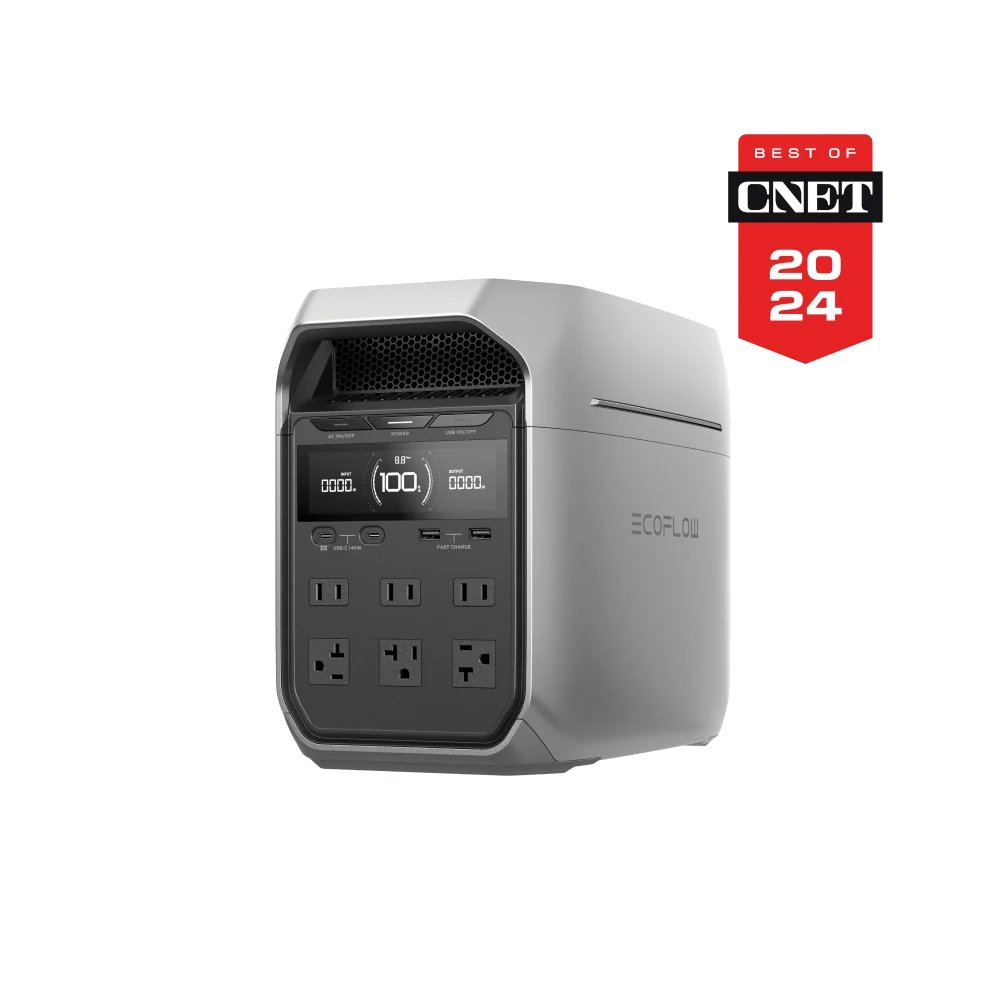
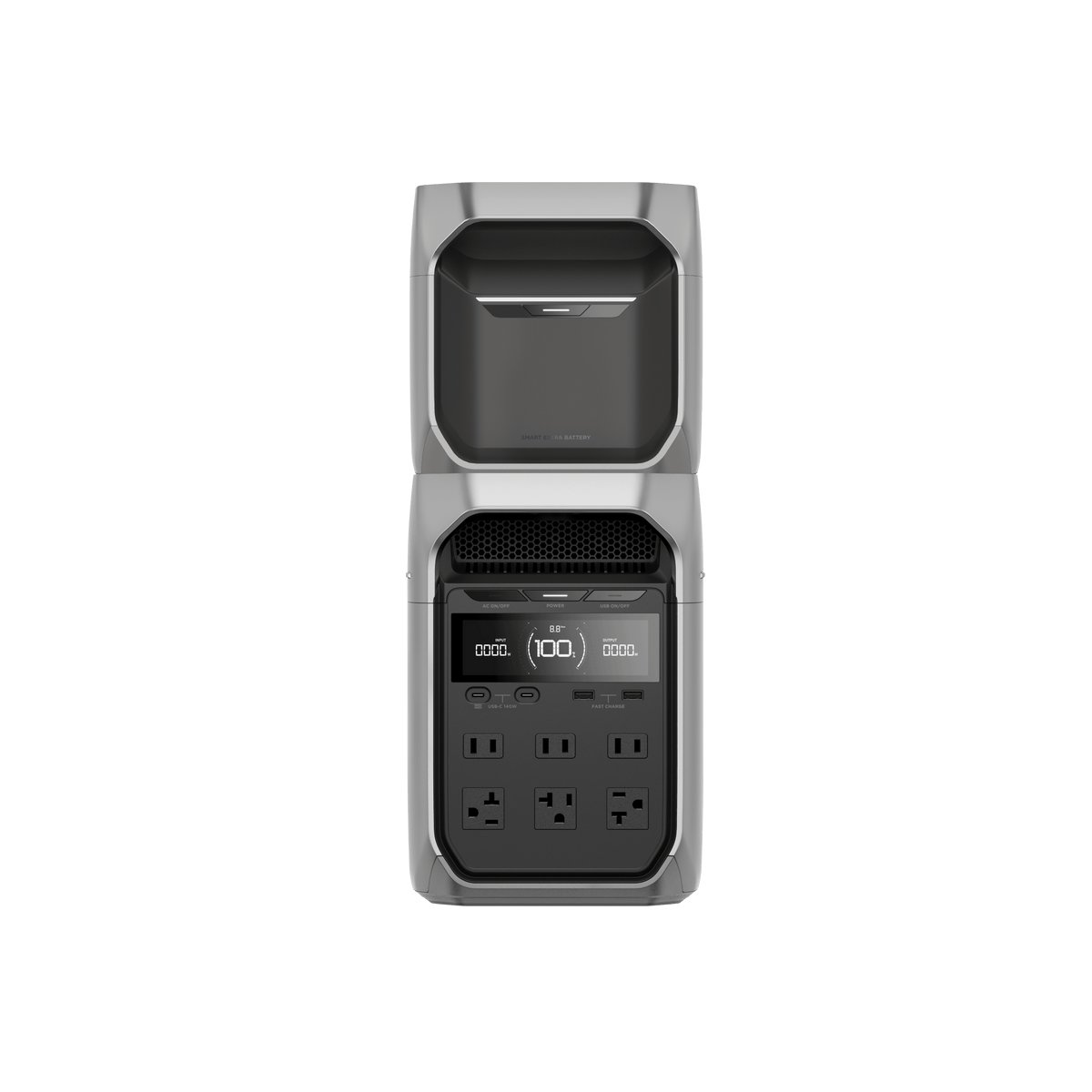
EcoFlow portable power station
EcoFlow
Rated 4.6 out of 5: 4.6 · 89 ratings
Your router and CPAP never notice the blackout. The DELTA 3 Plus switches to battery in under 10 milliseconds, silently, with no fumes.
EcoFlow DELTA 3 Plus portable power station, 1,024 Wh (EcoFlow's store, or Amazon's search results for it)
We earn a commission if you buy through these links, at no cost to you.
- 1,024 WhLFP battery, per EcoFlow
- 1,800 Wfrom 6 AC outlets, 3,600 W surge, per EcoFlow
- Under 10 msUPS switchover, per EcoFlow
- 4,000 cyclesto 80+ percent capacity, per EcoFlow
“Plug it into the wall, plug the router into it, and the next outage is a non-event.”
A power station is a big lithium battery, an inverter, a charger and a solar controller in one box: silent, no fumes, and safe to run in the living room, which a generator never is. We picked EcoFlow's DELTA 3 Plus after working through its manual: 1,024 Wh of LFP rated for 4,000 cycles, and 1,800 W from six AC outlets with 3,600 W of surge.
Its standout for an outage is the UPS: leave it plugged into the wall with the router, a CPAP or a computer plugged into it, and EcoFlow says it switches to battery in under 10 milliseconds when the grid drops. Refill it at 1,500 W from the wall or a generator run outside, or from two solar inputs of up to 500 W each.
By our arithmetic a 1,024 Wh station gives about 783 Wh at the outlets: a router for well over a day, a CPAP for a couple of nights, a refrigerator for part of a day. Not a space heater, an electric range or a well pump. EcoFlow backs it for five years.
Other models
How to use it
- Charge it to full when it arrives and test every outlet with a real load.
- Set it on a hard floor with air around it, away from bedding, curtains and the exit. Not in a closed cabinet; it is for dry places.
- For the router or CPAP, plug the station into the wall and the device into the station, so it switches over by itself when the power fails.
- Plug other loads in with extension cords. Never wire it into the house panel or plug it into a wall outlet with a male-to-male cord.
- Charge it only above freezing; in winter, keep it in the heated part of the house.
- Register it with EcoFlow and check cpsc.gov/Recalls for the model once a year.