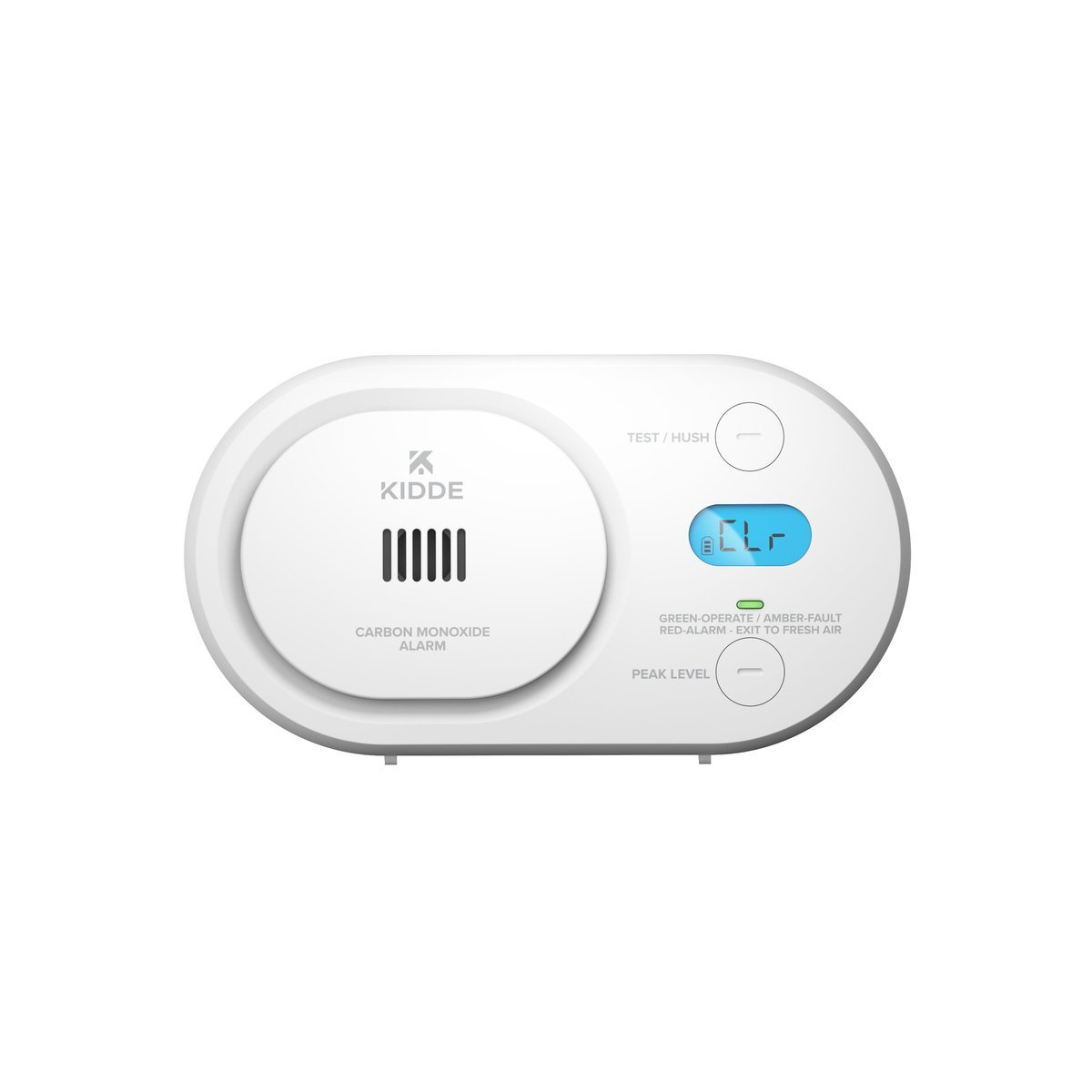
Carbon monoxide alarm battery
Rated 4.7 out of 5: 4.7 · 281 ratings
Carbon monoxide has no color and no smell. This is how you find out before it is too late, and it runs on two AA batteries when the power is out.
One Kidde COBDL battery CO alarm with backlit display and low-level CO alerts, 2 AA batteries
We earn a commission if you buy through these links, at no cost to you.
Manuals and documents
- 2 AAbattery powered, no outlet needed, per Kidde
- 85 dBalarm at 10 ft, per Kidde
- UL 2034meets the CO alarm standard, per Kidde
- Backlit displaycheck the status at night with one press
“The generator, the camp stove and the kerosene heater all come out in the same storm. So does this.”
Carbon monoxide kills people in their sleep after every major power outage, from generators, grills and camp stoves run indoors or too close to the house. You cannot see it or smell it. A CO alarm is the only way to know.
The alarm has to be battery powered. A plug-in alarm with no backup is useless in exactly the outage that brings the generator and the camp stove into play. Both Kidde alarms here run on two AA batteries, sound at 85 dB, and have a backlit display you can check in the dark with one press. The COBDL adds low-level CO alerts, which Kidde says help protect children, older adults and pets, who can be affected sooner.
CDC's advice: put a battery-operated CO alarm near every sleeping area, and near the area being heated when a fireplace, wood stove or kerosene heater is in use. Ready.gov and USFA add one on every level of the home. Keep a spare with the emergency supplies.
How to use it
- Put one outside every sleeping area and one on every level, following the alarm's instructions for placement.
- Test it every month with the test button.
- Change the batteries when the clocks change in spring and fall (CDC). Use the AA batteries Kidde lists; Kidde says not to use lithium in these alarms.
- A single chirp once a minute means a low battery, not CO: replace the battery and test.
- If the alarm sounds, get everyone out into fresh air and call 911 from outside.
- Replace the alarm according to the maker's instructions or every 5 years (CDC); these Kidde alarms also beep to tell you when they reach end of life.