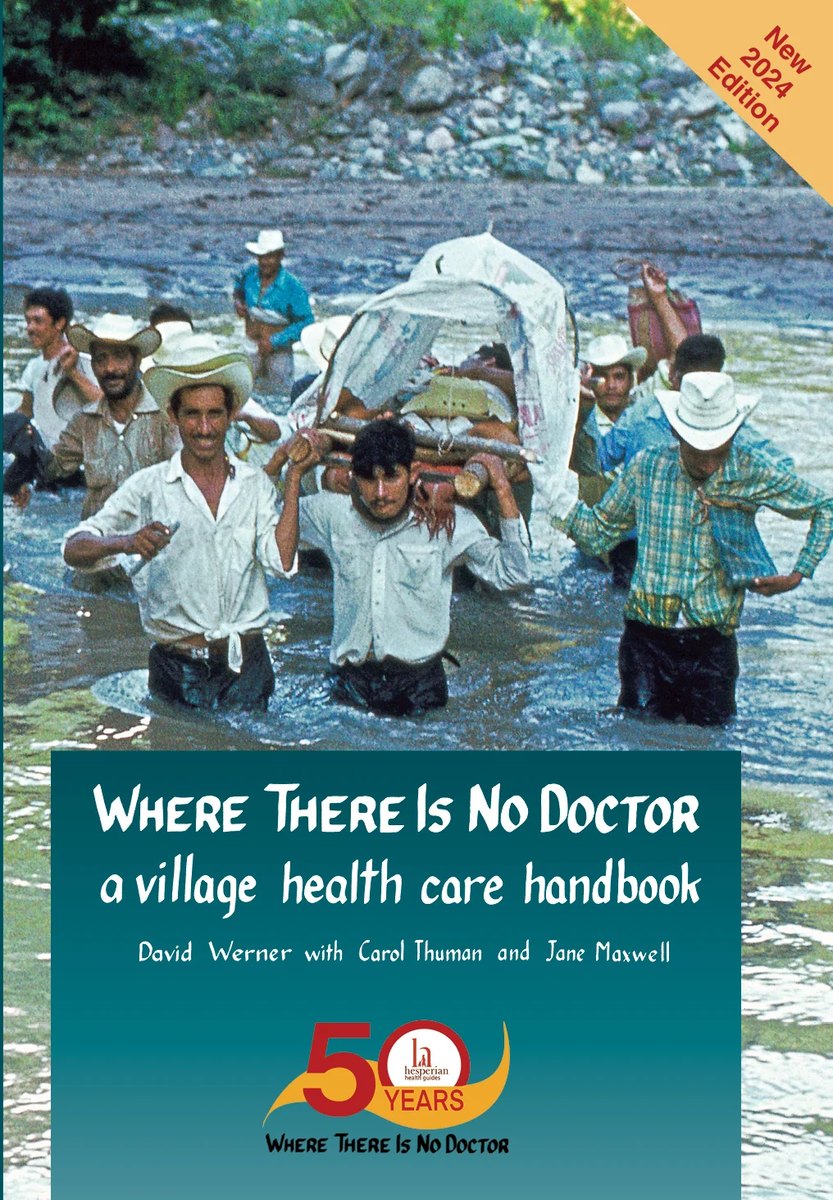
Where There Is No Doctor (Hesperian)
Hesperian Health Guides · 2024 ed
Rated 4.7 out of 5: 4.7 · 2,029 ratings
The medical book written for places with no doctor, which is exactly where you are when the roads are closed.
Where There Is No Doctor, A Village Health Care Handbook, second edition, 21st revised printing (2025), 448 pages, ISBN 9780942364156
We earn a commission if you buy through these links, at no cost to you.
- 448pages, plain words and drawings throughout
- 2025revised printing, with current medicine information
- WHOconsiders it the most widely used health care manual in the world, Hesperian says
- No powerneeded to read it; the paper copy works when the phone does not
“The first book we would put on the shelf next to the first aid kit. It tells you what you are looking at, and when it is past what you can handle at home.”
Where There Is No Doctor was written for village health workers far from any clinic, and that is why it belongs in a home emergency kit. When the roads are closed or the clinic is overwhelmed, you are in the same place: someone is sick or hurt, and you have to decide what it is, what you can do, and whether it needs help you cannot give.
Hesperian keeps it current. The 2025 printing has updated medicine information, and it is 448 pages of plain language and simple drawings: how to examine a sick person, wounds, burns, broken bones, dehydration and the drink that treats it, fevers and infections, pregnancy and children's health, and the warning signs that mean "get help now". Hesperian says the World Health Organization considers it the most widely used health care manual in the world.
Hesperian also publishes the chapters online in its free HealthWiki, but a website is no use with the power and the phone network down. The paper copy is the one that works then.
It is a reference, not a doctor. Read it now, while nothing is wrong, so you know where to look; and always follow a doctor's or public health official's advice when you can reach one.
How to use it
- Read the first chapters, on examining a sick person and on home cures, before you need them, and mark the pages you would reach for first: bleeding, burns, dehydration, fever.
- Keep it with the first aid kit, not on a bookshelf in another room.
- Use the index and the drawings to match what you see; the book says when a problem needs an experienced health worker, and that advice comes first.
- Write down what you saw and did, with the times, for whoever treats the person next.