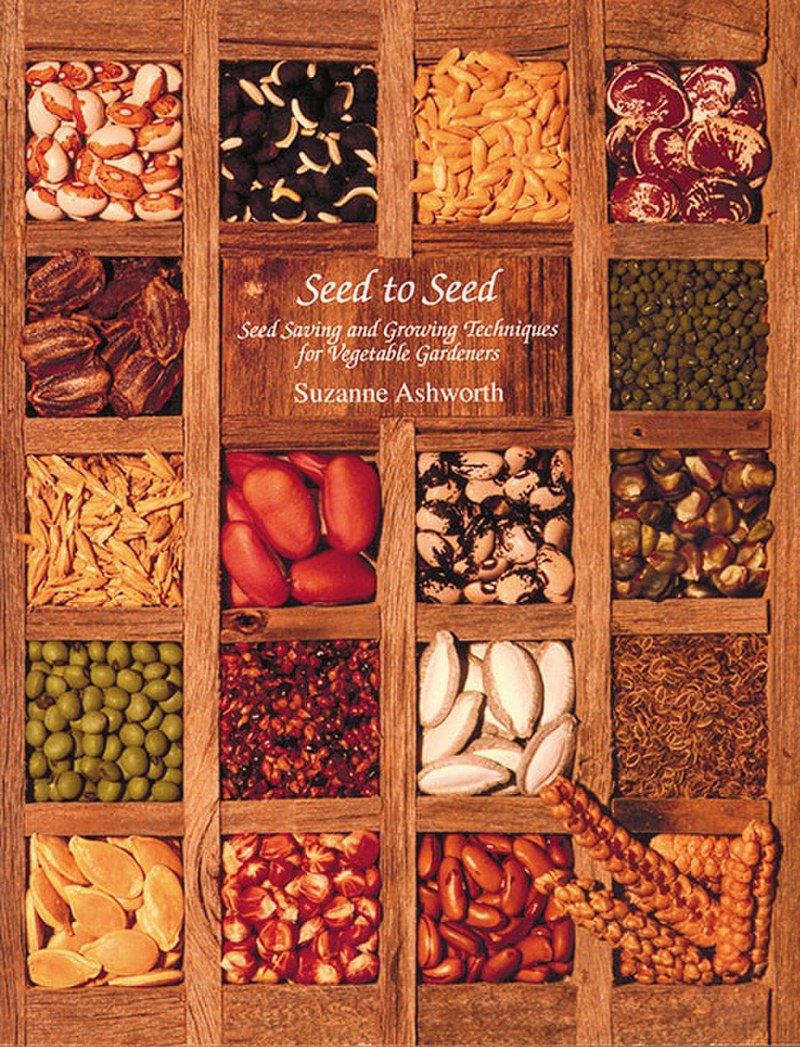
Seed to Seed, Second Edition (Suzanne Ashworth)
Seed Savers Exchange · Second edition, paperback, 2002 (ISBN 978-1-882424-58-0)
Rated 4.2 out of 5: 4.2 · 1,796 ratings
Save your own seed from 160 vegetables, so the garden never depends on a seed catalog again.
Seed to Seed, Seed Saving and Growing Techniques for Vegetable Gardeners, second edition, by Suzanne Ashworth, Seed Savers Exchange, ISBN 9781882424580
We earn a commission if you buy through these links, at no cost to you.
- 160vegetables, each with its own seed-saving method
- Isolationdistances and population sizes that keep seed true
- 2nd editionadds how to start each crop from seed
- Seed Saverspublished by the Seed Savers Exchange
“A garden that saves its own seed is a garden nobody can take away from you.”
Seed runs out, and in a bad year the racks at the store empty first. A gardener who saves seed grows next year's garden from this year's, and every year the plants fit the local soil and weather a little better.
Seed to Seed is the standard reference for doing it right. For each of 160 vegetables it gives how the flowers are pollinated, how many plants you need to keep the variety healthy, how far apart varieties must be kept so they do not cross, how to cage or hand-pollinate, and how to harvest, clean, dry and store the seed. The second edition adds how to start each crop from seed, so it doubles as a growing guide.
Start with open-pollinated or heirloom varieties: seed saved from hybrids does not grow true.
How to use it
- Begin with the easy self-pollinating crops (beans, peas, lettuce, tomatoes) the first year.
- Look up each crop's isolation distance before you plant, not at harvest.
- Label and date every packet, and keep seed cool, dark and dry.